A robot vacuum with a self-cleaning base usually solves only half the problem: the robot drives itself, but the station still needs hands-on work — top up clean water, empty the dirty tank, pull off the pad and dry it so it doesn’t start to smell. The “automatic” clean turns into a weekly ritual of servicing the device itself.
The JONR P20 Pro International Edition is built around a different logic — a full hands-free cycle. The station doesn’t just recharge the robot and refill clean water; it also auto-drains the dirty water, washes the mop and dries it with hot air. The 3-litre dust bag is rated for weeks of operation without intervention. Rated suction is 8,000 Pa, runtime 2.7–3.8 hours on a single charge.
This JONR P20 Pro review breaks down what each of those numbers delivers in practice, where the system has honest limitations, and how to set it up correctly after unboxing.
Looking to buy the JONR P20 Pro robot vacuum?
Check the current price and availability on AliExpress
This is an affiliate link. The price stays the same for you — we earn a small commission that supports Findugo.
8,000 Pa suction: what it delivers in practice
8,000 Pa is the vacuum pressure the robot’s turbine generates at a rated motor power of 50W. For comparison: budget robot vacuums put out 2,000–4,000 Pa, mid-range models 5,000–6,000 Pa. 8,000 Pa places the JONR P20 Pro in the top tier for suction strength.
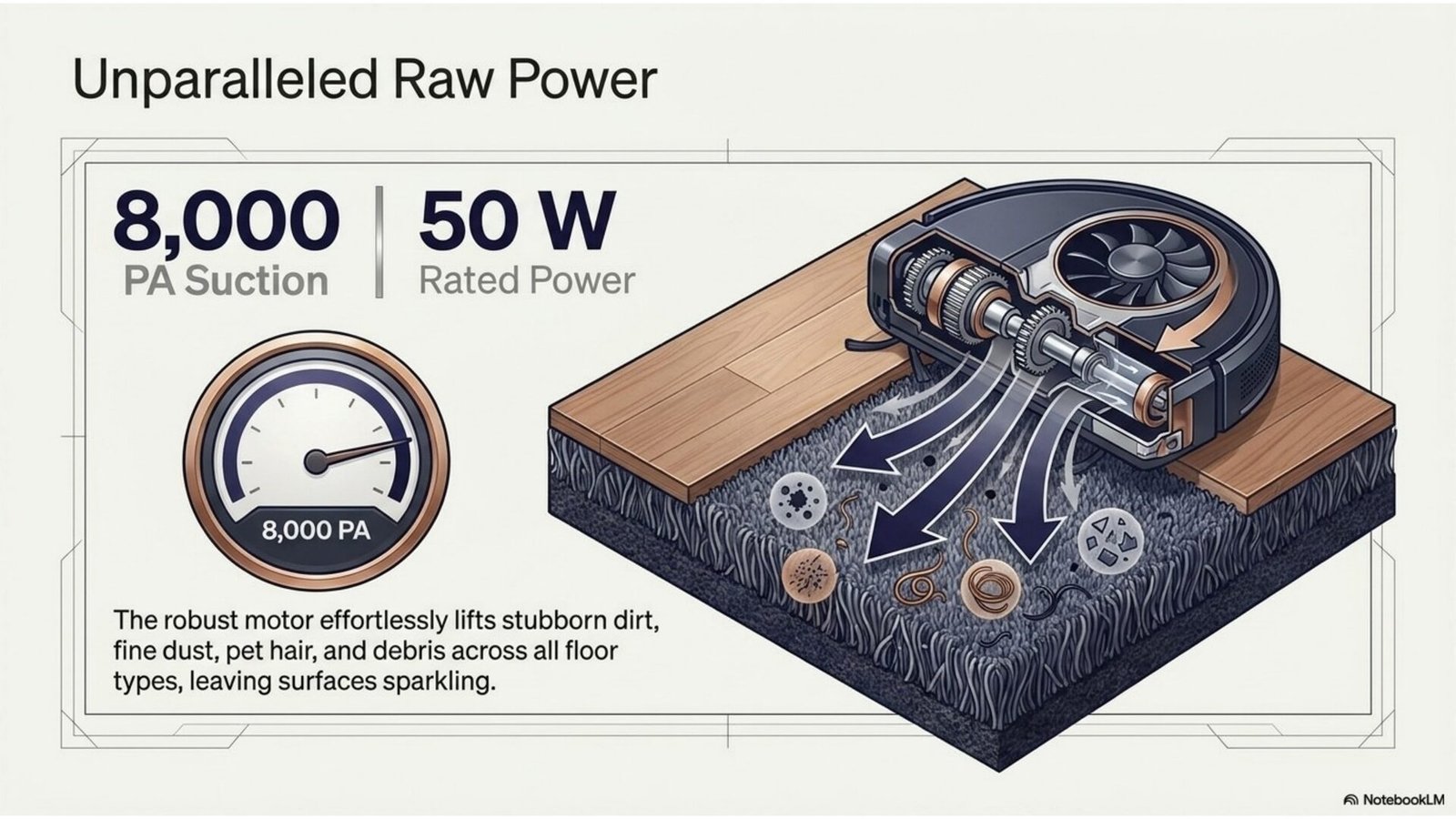
In practice, the gap between 4,000 and 8,000 Pa shows up in two scenarios:
- High-pile carpets. Weaker robots only collect surface debris, leaving dust and hair deep in the pile. 8,000 Pa pulls embedded dirt from the very base of the fibres — critical if you have pets.
- Hard floors and crevices. Fine dust, larger debris, crumbs and grit are captured in a single pass, with no streaks or missed strips along the skirting boards.
Pet hair is its own scenario where strong suction is decisive: long cat and dog hair that wraps around the brush and stays embedded in the pile on weaker robots ends up in the dustbin here.
One limitation worth understanding: 8,000 Pa is the peak figure in Max mode. In everyday Standard mode the robot runs at reduced power for quieter operation and longer runtime, switching to full suction on carpeted zones automatically (if surface detection is enabled) or manually via the app. In other words, 8,000 Pa is available when you actually need it, not constantly.
Base station anatomy: what the Hub does
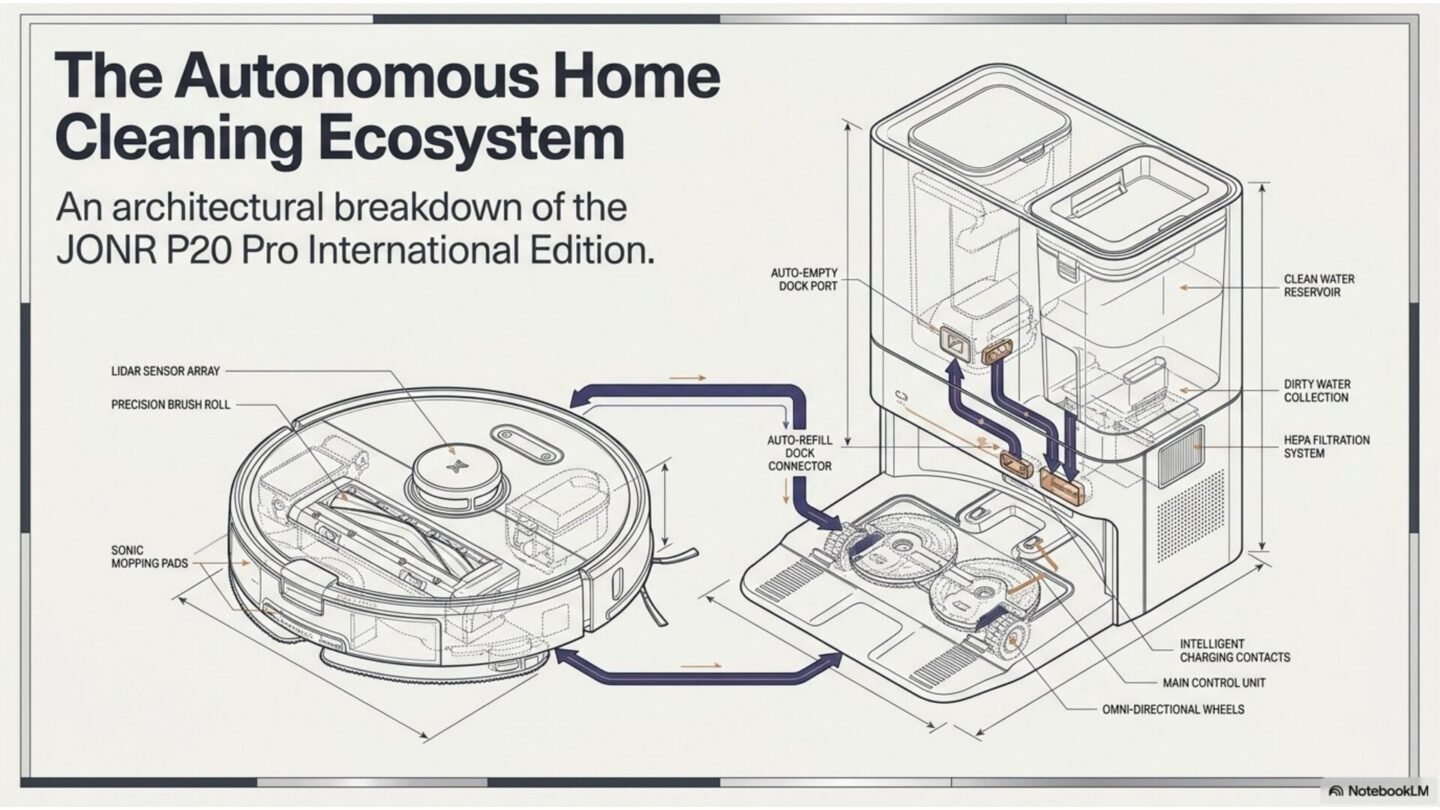
The base station (Hub) is what separates the JONR P20 Pro from an ordinary robot vacuum. Its power draw is 600W, and that figure is explained not by charging but by the self-cleaning components: water pumps, the mop-washing system and thermal drying.
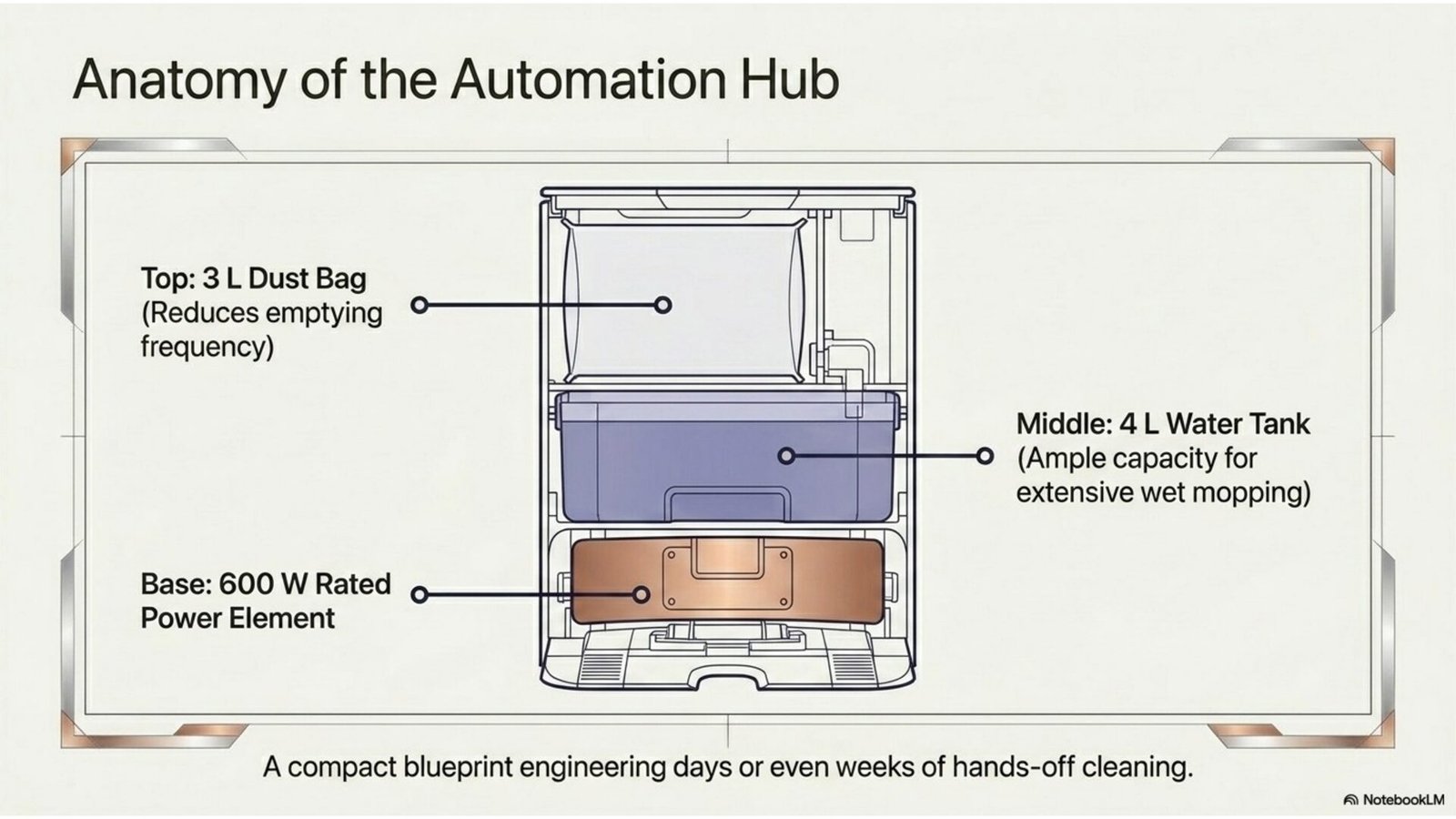
The station’s key capacities and what they do:
- 3L dust bag. After each clean, the robot empties debris from its own bin into this bag. 3L lasts several weeks — the bag is replaced roughly once a month with daily cleaning.
- 270 ml robot dustbin. The robot’s internal bin, optimised for fast cyclic emptying into the station’s main bag.
- 4L water tank. A large reservoir for extended wet-cleaning cycles. Before every run the station automatically refreshes the water in the robot’s tank.
The key technical advantage is automatic dirty-water drainage. Most competitor stations only refill clean water into the robot, but the dirty water has to be emptied by hand. The JONR P20 Pro drains it itself, closing the wet-cleaning loop completely.
The 4-in-1 self-cleaning cycle
The hands-free concept is delivered through an automatic cycle the station runs after each clean with no human involvement.
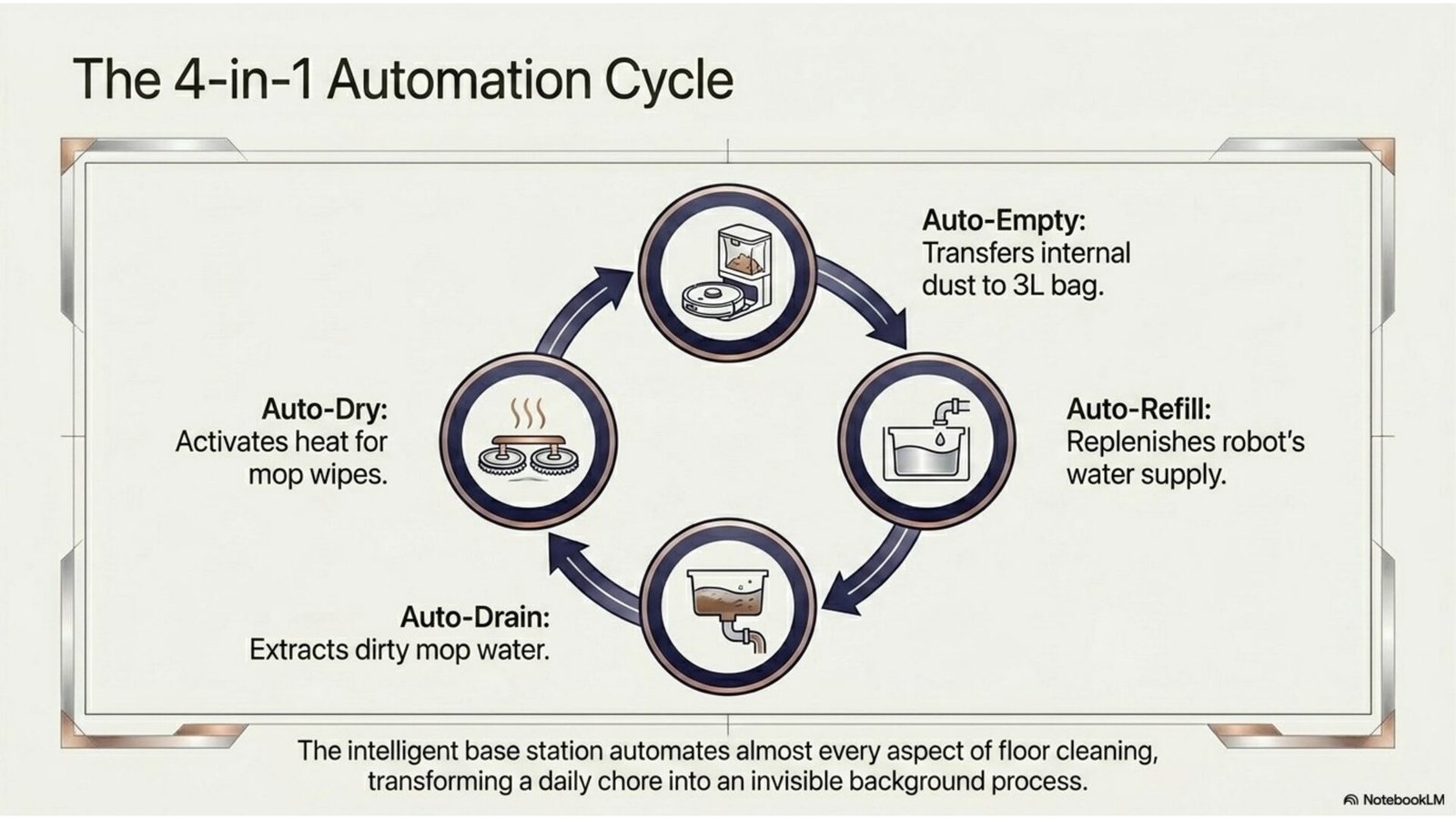
- Auto-Empty. Instant transfer of debris from the robot’s bin (270 ml) into the base bag (3L).
- Auto-Wash. The station washes the robot’s mop, removing embedded dirt.
- Auto-Refill. Clean water from the 4L reservoir is loaded into the robot’s tank before the next run.
- Auto-Dry. The mop is dried with hot air so it doesn’t stay damp between cycles.
- Auto-Drain. Dirty water is drained automatically — the element that makes the system genuinely autonomous.
The sum of this is that between dust-bag changes (every few weeks) you don’t touch the system at all. The robot cleans, the station services the robot, and debris and dirty water leave on their own.
Hygiene: automatic mop drying
The most common problem with mopping robots is a pad that stays wet after washing. In a warm, damp environment bacteria multiply within hours, mould appears, and that musty smell develops — which then gets smeared across the whole floor on the next clean.
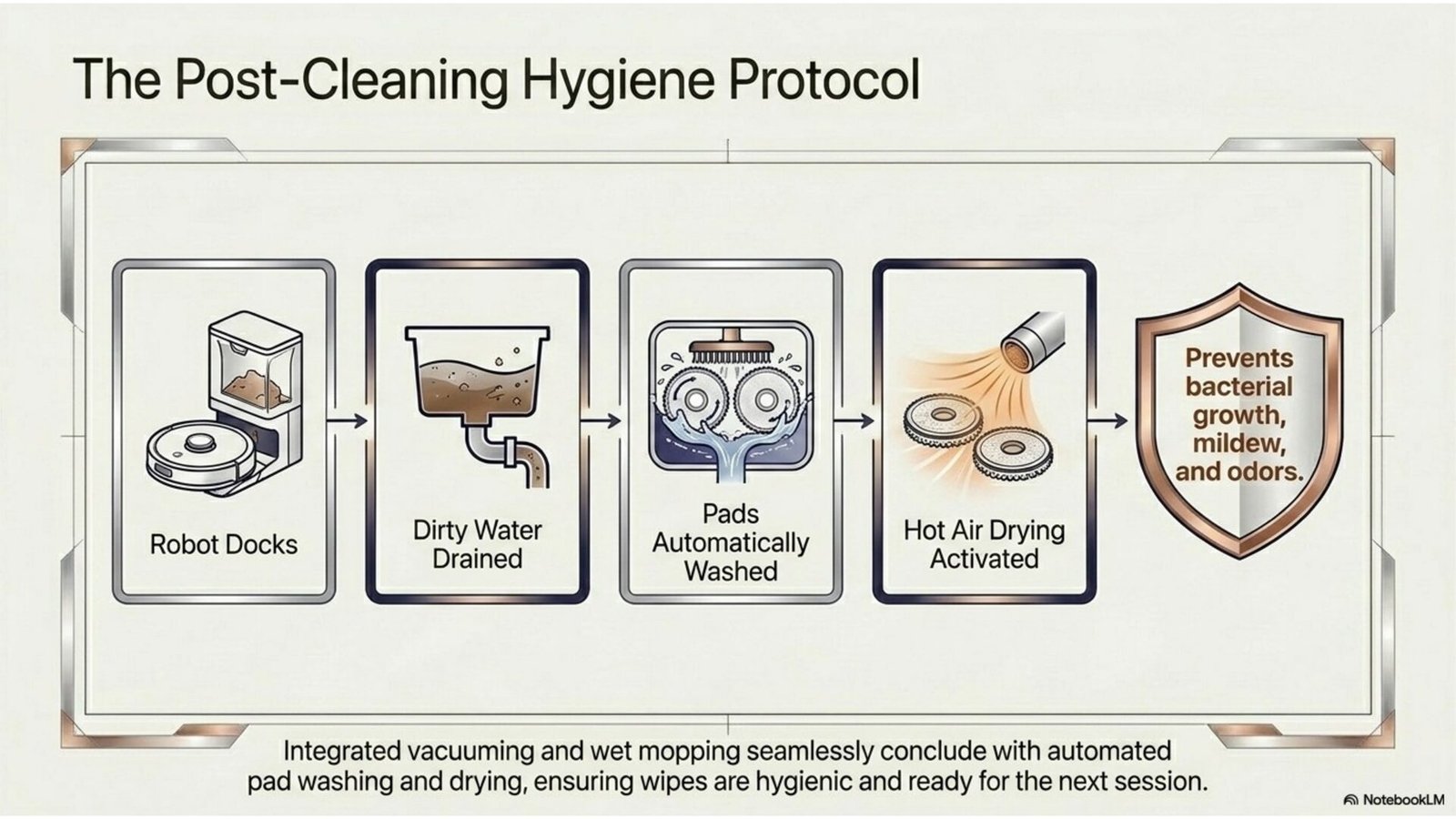
The JONR P20 Pro solves this with thermal drying: after washing, the station blasts the pad with hot air until fully dry. This isn’t a cosmetic feature but a sanitary one — it eliminates biological contamination inside the system itself. For homes with children, allergy sufferers or pets it matters especially: a dirty wet pad in an ordinary robot becomes a source of odour and microbes rather than a cleaning tool.
2.7–3.8 hour runtime and navigation
For large areas (houses, multi-room apartments) the ability to clean everything in one pass without returning to base mid-job is critical. The JONR P20 Pro claims 2.7–3.8 hours of runtime — the spread depends on power mode.
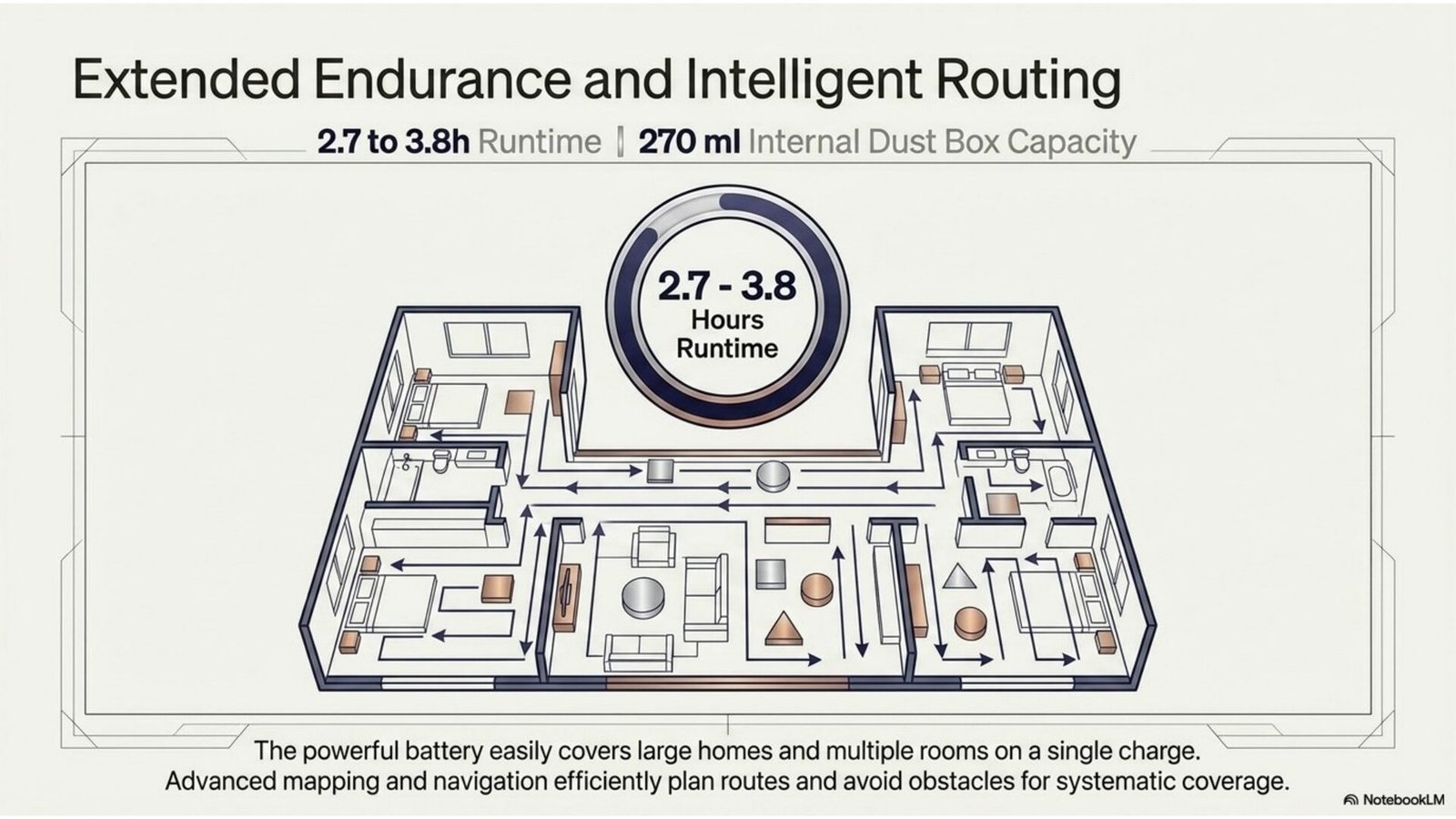
- Standard mode — up to 3.8 hours. Optimal for everyday cleaning of large areas. The robot covers a multi-room apartment or house in one cycle.
- Max mode — around 2.7 hours. Maximum suction drains the battery faster but delivers deeper cleaning of carpets and difficult surfaces.
Navigation is built on systematic mapping: the robot plans a grid route, skipping no areas and not re-running cleaned ones. The system recognises and avoids obstacles, and the International Edition is, per the manufacturer, optimised for precise mapping of the complex layouts typical of larger homes.
Compared with an ordinary robot vacuum
The gap between the JONR P20 Pro and a standard robot vacuum is structural, across several parameters:
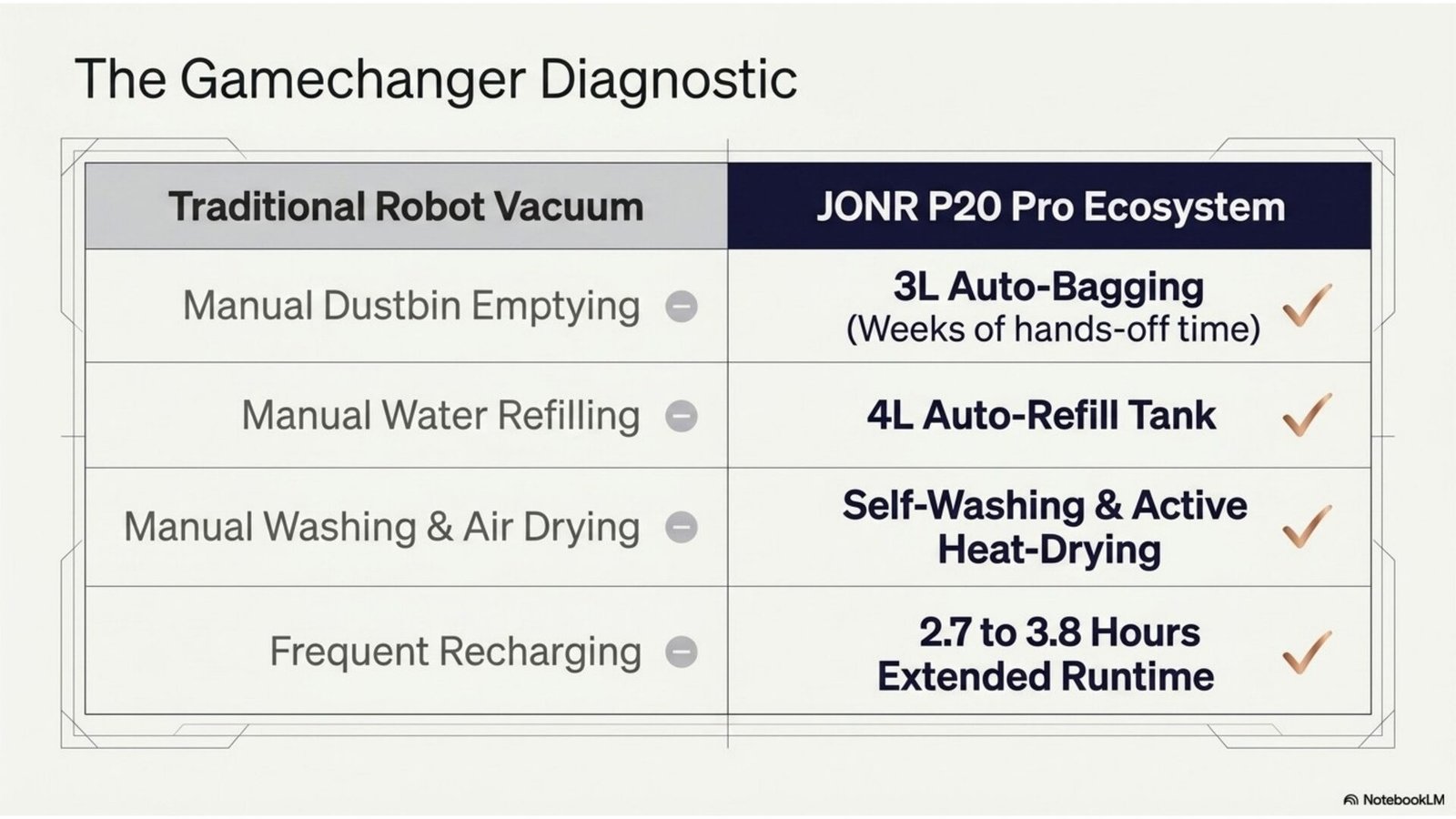
The key difference is maintenance frequency. An ordinary robot needs daily bin emptying and manual mop care. The JONR P20 Pro runs autonomously for weeks: the only routine action is a dust-bag change once a month. Direct rivals at this automation level (Roborock S8 MaxV Ultra, Ecovacs Deebot X2 Omni, Dreame L40 Ultra) offer a similar self-cleaning cycle, but usually in a higher price bracket.
Where the JONR P20 Pro wins is not on a single spec but on their sum: 8,000 Pa suction, automatic dirty-water drainage and thermal mop drying in one system usually appear in pricier models. Where it loses: the brand is less known than Roborock or Ecovacs, so it’s worth checking the service network and spare-parts availability (filters, bags, brushes) for your region in advance — the typical risk with less-established brands.
Specifications: system telemetry
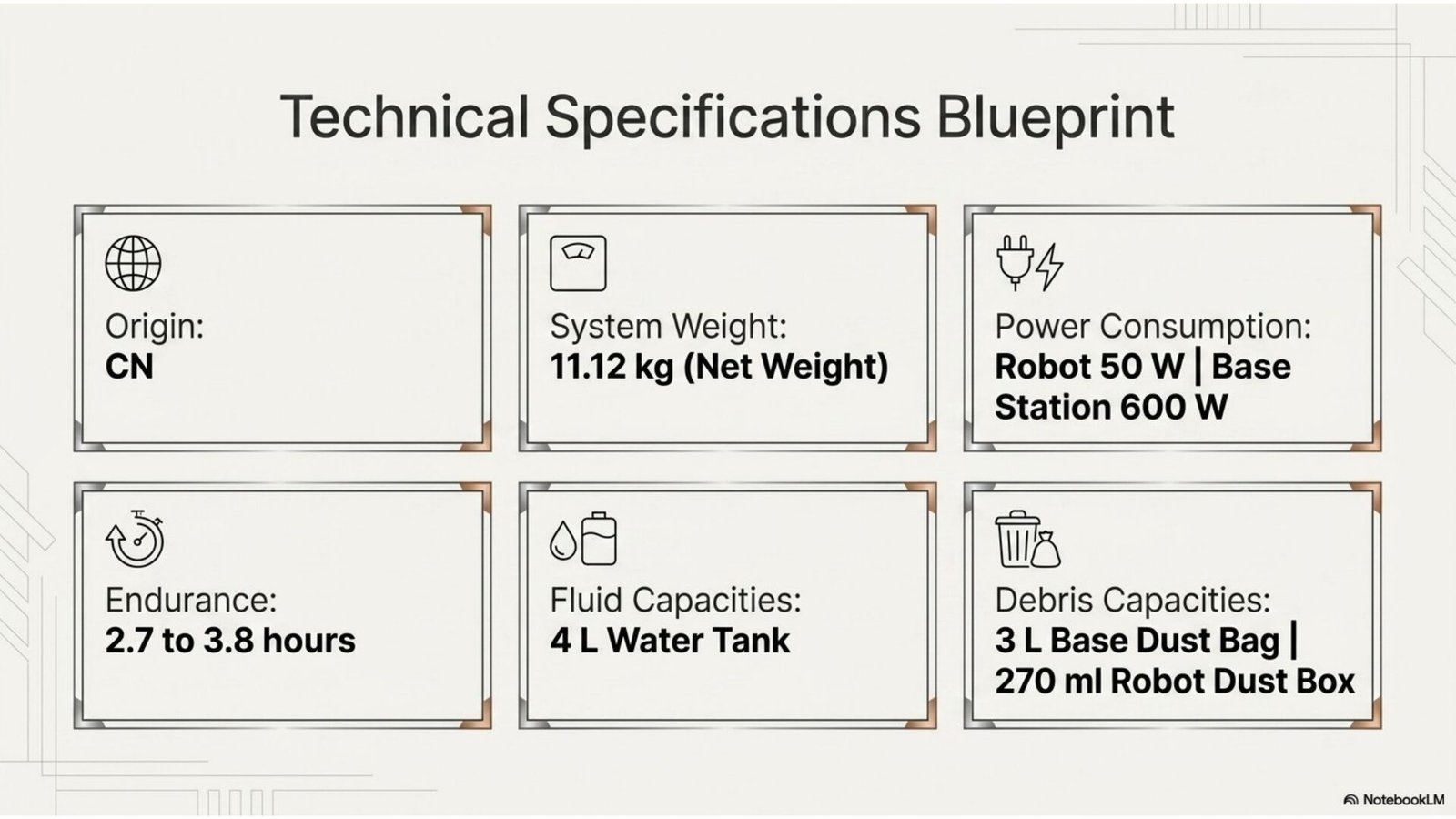
- Suction: 8,000 Pa
- Runtime: 2.7–3.8 hours
- Power consumption: 50W (robot) / 600W (station)
- Dust bag: 3L / Water tank: 4L / Robot dustbin: 270 ml
- Net weight: 11.12 kg / Country of origin: China
The 11.12 kg weight signals a full-size station with pumps and reservoirs, not a compact charging dock. This is the premium segment, and when buying tech in this class it’s worth verifying the real value of an offer — how to do that without overpaying we covered in our smart online shopping guide.
Step-by-step setup after unboxing
To get the JONR P20 Pro running fully autonomously, spend 15–20 minutes on correct initial setup.
- Station placement. Put the Hub against a wall on a hard floor, leaving ≥0.5 m clearance on the sides and ≥1.5 m in front for the robot to dock. You’ll need a socket nearby — the station draws up to 600W during the self-cleaning cycle.
- Filling the reservoirs. Fill the 4L tank with clean water, install the 3L dust bag in the station compartment. Make sure the dirty-water compartment is empty.
- First charge. Place the robot on the station and let it charge to 100% before the first run (usually 4–6 hours).
- Wi-Fi and app pairing. Install the companion app, connect the robot to your home Wi-Fi (the 2.4GHz band is more stable for robot vacuums). Link the device to your account.
- Mapping run. Start the first mapping cycle — the robot drives around the space without cleaning to build a plan. Let it finish the full sweep without moving furniture mid-run.
- Zoning and no-go areas. In the app, label the rooms, set no-go zones (pet bowls, cables, long-fringe rugs) and virtual walls.
- Cleaning modes. Set a schedule (e.g. daily at 11:00 when nobody’s home), choose Standard for everyday cleaning and Max for deep carpet cleaning.
- Verify the self-cleaning cycle. After the first clean, confirm the station ran the full cycle: emptied debris, washed and dried the mop, drained the dirty water. If drainage didn’t work, check the drain compartment is seated correctly.
Frequently asked questions
Is the JONR P20 Pro suitable for homes with pets?
Yes, that’s one of the core scenarios. 8,000 Pa pulls hair out of carpet pile, and the automatic empty into the 3L bag means you don’t contact collected hair for weeks. For multi-pet homes it’s an optimal choice on suction strength.
How much space does the base station take?
It’s a full-size station (11.12 kg including the robot). It needs a permanent spot against a wall with a socket and clear space in front. It can’t be called compact — that’s the price of full cycle automation.
How often does the system need manual servicing?
The only routine action is a dust-bag change roughly once a month. Topping up clean water in the 4L tank is as needed (depends on the wet-cleaning area). The station drains dirty water itself.
What’s the difference between Standard and Max modes?
Standard gives up to 3.8 hours of runtime and suits everyday cleaning. Max uses maximum suction for deep carpet cleaning but cuts runtime to ~2.7 hours. For mixed flooring it makes sense to keep Standard as default and trigger Max selectively for carpeted zones.
What does “International Edition” mean?
It’s a version adapted for EMEA and North American markets — for the spacious layouts typical of houses and large apartments. Per the manufacturer, it’s optimised for precise mapping of complex floor plans.
Bottom line
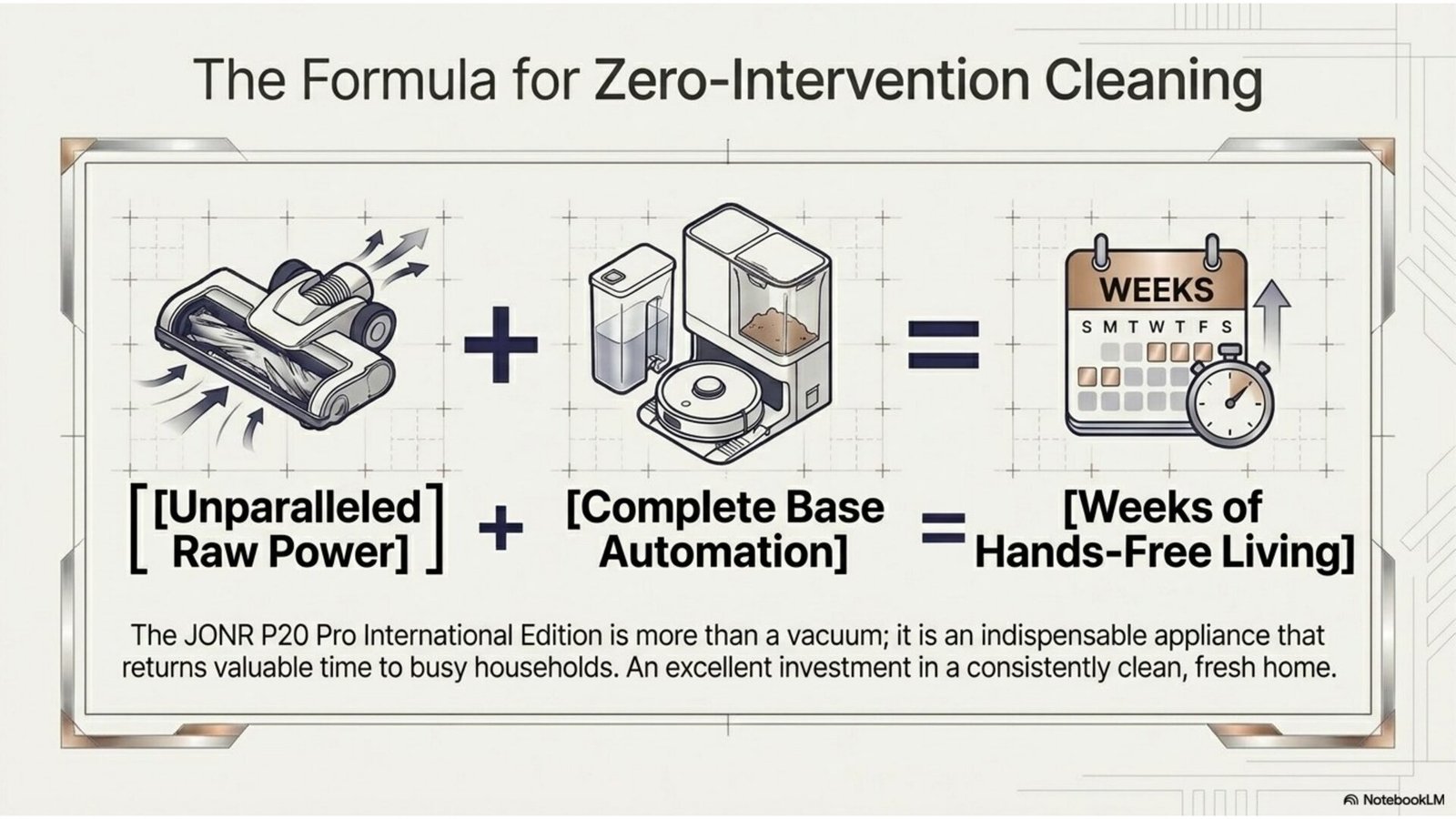
The JONR P20 Pro closes the main weakness of mopping robot vacuums — the need to service the device itself. 8,000 Pa of power, a 3L bag, a 4L tank, automatic dirty-water drainage and thermal mop drying together deliver what the manufacturer calls a full hands-free cycle: between monthly bag changes, the system needs no attention.
The honest limitations are also there: the station is heavy (11.12 kg) and needs a dedicated spot near a socket, Max mode noticeably shortens runtime, and a full-size Hub means premium-segment pricing. If you have a large area, pets, and no desire to fiddle weekly with bins and wet pads, the JONR P20 Pro saves exactly what you buy a robot vacuum for: your time.
Looking at other gadgets we’ve tested? Check the Huawei Watch Fit 4 Pro review.
💡 This review contains affiliate links. If you click through and make a purchase, we may earn a commission at no extra cost to you. This supports our editorial work and does not affect our recommendations. Learn more →