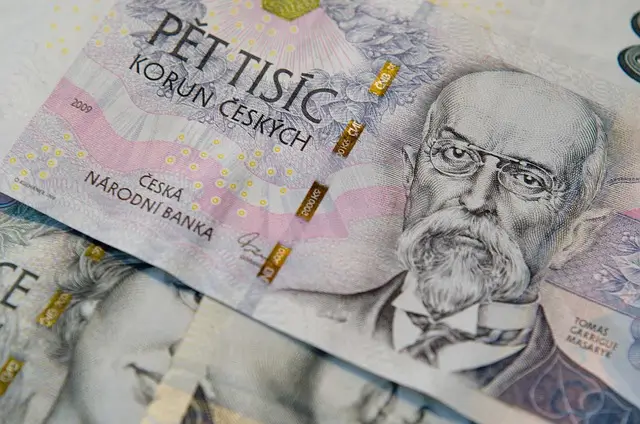
Ten thousand crowns in your account in 15 minutes — no queue, no paperwork, no questions asked. Sounds like a solution. But according to the Czech National Bank, one in five microloan borrowers fails to repay. The convenience here costs you triple-digit annual interest — and sometimes years of debt. That’s not a reason to dismiss the tool entirely, but it’s a serious reason to understand how it works before signing the contract.
What Online Loans Are and How They Differ from Bank Credit
An online loan (mikropůjčka, expresní půjčka) is a short-term consumer credit issued by non-bank financial companies through the internet. The main difference from a bank loan isn’t legal form — it’s logic: speed and accessibility in exchange for a significantly higher cost. A bank reviews the borrower for several days, demands proof of income and collateral on larger amounts. A non-bank lender decides in minutes.
How Automated Scoring Works
The approval decision is made by an algorithm — automated scoring. The system analyses data from credit registries (SOLUS, Bankovní registr klientských informací), checks for active enforcement proceedings, and evaluates payment discipline on existing obligations. Some lenders additionally analyse cash flow on the bank account — through open banking with the borrower’s consent.
That’s why approval takes 5–15 minutes: no human is involved. The flip side — the system doesn’t account for context. A temporary missed payment two years ago due to illness and systematic insolvency look similar in scoring.
Regulation in the Czech Republic: The Role of ČNB and the Consumer Credit Act
Non-bank lenders in the Czech Republic operate under the supervision of the Czech National Bank (ČNB) and must hold a licence under Zákon č. 257/2016 Sb. o spotřebitelském úvěru — the Consumer Credit Act. The law requires lenders to disclose RPSN (roční procentní sazba nákladů — the annual percentage rate including all costs), to assess the borrower’s creditworthiness, and to comply with limits on penalty charges.
The registry of licensed lenders is available at cnb.cz. Operating without a licence is a criminal offence. This doesn’t mean every licensed company is honest, but the activity of unlicensed organisations is unequivocally illegal.
Who Can Get an Online Loan
Basic requirements at most non-bank lenders in the Czech Republic:
- Age 18 and over (some lenders set the minimum at 20–21)
- Czech citizenship or a valid residence permit
- A bank account with a Czech bank — for identity verification and fund transfer
- A Czech mobile number — for SMS verification
- Positive or neutral credit history (no active enforcement proceedings)
Formal employment isn’t a mandatory condition with most lenders: self-employed people, students with verifiable income, and pensioners can all apply. However, a real creditworthiness check still happens, and the absence of stable income reduces approval odds or limits the available amount.
Getting a Loan Without a Rodné Číslo: What Foreigners Need to Know
The residence permit line in the list above looks straightforward, but it hides a situation foreigners run into regularly. The permit is valid, the Czech bank account is open, the job is above board — and the application still stalls, because the form demands a rodné číslo and there isn’t one.
Why Lenders Need the Number
The rodné číslo (birth number) is a ten-digit identifier Czech credit registries use to track borrowers. The automated scoring described above queries SOLUS and the Nebankovní registr klientských informací by exactly this number. Without it the algorithm cannot retrieve a credit history, so the application is either rejected outright or pushed to manual review on stricter terms.
Who Is Assigned One Automatically
Under Zákon č. 133/2000 Sb. o evidenci obyvatel, the number is assigned z moci úřední — automatically, without any application on your part:
- foreign nationals with residence permitted for longer than 90 days — přechodný, dlouhodobý or trvalý pobyt;
- EU citizens intending to stay in the country for more than three months;
- people granted international protection through asylum or subsidiary protection.
The assigning authority is the Ministry of the Interior’s department for asylum and migration policy (odbor azylové a migrační politiky), based on your registered place of residence. The quickest way to check whether you already have a number is your průkaz o povolení k pobytu or pobytová karta — if one has been assigned, it is printed there.
Who Is Not — and Why It Matters
The Ministry of the Interior states it plainly: holders of dočasná ochrana (temporary protection) and of the průkaz o povolení ke zvláštnímu dlouhodobému pobytu are not assigned a rodné číslo automatically. That covers a large share of Ukrainians who arrived after 2022 — and explains the gap between feeling that your paperwork is in order and being blocked at the application form.
How to Obtain One
You can apply for the number yourself. The law permits an application made to satisfy the conditions of other legal provisions, and obtaining credit (poskytnutí úvěru) is named explicitly among those grounds, alongside employment and study.
- Where to apply. Ministerstvo vnitra, odbor správních činností, oddělení rodných čísel, náměstí Hrdinů 1634/3, Prague 4. In person, by post, through a datová schránka (ID 6BNAAWP), or by email to eorc@mv.gov.cz — the last option requires a qualified electronic signature.
- Language. The application must be written in Czech or accompanied by an officially certified translation.
- Fee. CZK 1,000. Citizens of the EU and EEA, along with their family members, are exempt.
- Timeline. Thirty days by statute, often longer in practice. Start the process before you need the money, not on the day you do.
What the Number Doesn’t Solve
Having a rodné číslo is necessary but not sufficient. The lender will still require a Czech bank account — most non-bank companies will not transfer to a foreign one. The Czech mobile number, the valid residence document, and the creditworthiness assessment all remain in force. Available amounts tend to be lower for non-residents and RPSN higher, which reflects a shorter track record in Czech registries rather than a separate set of rules for foreigners.
Treat any offer advertised as “půjčka bez rodného čísla” with particular caution. A licensed lender is legally obliged to assess creditworthiness under Zákon č. 257/2016 Sb. A company promising to skip identification entirely is either breaking the law or has no intention of releasing any money.
Advantages: What Borrowers Pay For
Speed and Accessibility
Applications can be submitted any time of day — at 3 a.m. on a Sunday. The decision arrives in 5–15 minutes. Money lands in the account within minutes of approval, or in the first banking hours if the transfer is processed overnight. For an emergency where money is needed immediately, this mechanism has no equivalent in the traditional banking system.
Minimal Documentation
In most cases, an ID and a bank account are enough. No income certificates, no guarantors, no notarised documents. Identity verification happens online — through uploading a photo of the document and a selfie, or through a verification bank transfer (1–10 CZK) from your personal account.
Transparency and RPSN
The law obliges every licensed lender to disclose RPSN — the full annual cost of the loan including all fees and charges. This is the only correct figure for comparing offers: a nominal interest rate without fees hides the real cost. If a lender doesn’t display RPSN, or only publishes the nominal rate — that’s a legal violation and a serious red flag.
The Risks Adverts Don’t Mention
How the Debt Spiral Works
The mechanism is simple and devastating. The borrower takes 5,000 CZK for 30 days at RPSN 250%. The cost of the loan — about 1,000 CZK for the month. By the repayment date, the full debt amount (6,000 CZK) is unavailable. The borrower processes a rollover: pays a fee of 700–1,000 CZK to push back repayment of the principal by another month. After three such rollovers, they’ve paid 3,000 CZK in fees but still owe 5,000 CZK of principal plus new interest.
Some lenders make rollover an automatic option — and it activates without any explicit action by the borrower if they don’t repay on time. Six months into such a spiral, the original 5,000 CZK loan turns into a 15,000–20,000 CZK obligation.
Late Payment Penalties and the Hit to Credit History
A single day of delay triggers penalty charges: a fixed fine of 500–1,000 CZK plus interest on the outstanding debt. The law caps the maximum size of penalties, but even within legal limits, the amount mounts up fast. With a delay of more than 30–60 days, the lender reports the information to the SOLUS credit registry and the ČNB registry. The record stays on file for several years and closes off access not only to loans but also to mobile contracts, instalment plans, and rentals from a number of landlords.
Comparing Financial Products
| Parameter | Online Loan | Bank Loan | Credit Card |
|---|---|---|---|
| Approval speed | 5–15 minutes | 1–5 business days | 1–3 business days |
| RPSN (annual rate) | 100–300% and higher | 7–20% per year | 20–30% per year (after grace period) |
| Typical amount | 1,000 – 30,000 CZK | 20,000 – 1,000,000+ CZK | 5,000 – 100,000 CZK (limit) |
| Term | 7–90 days | 1–10 years | Revolving (no fixed term) |
| Borrower requirements | Minimal: 18+, residence/citizenship, Czech bank account | Stable income, good credit history | Income, credit history, sometimes guarantor |
| Debt-trap risk | High — rollovers, penalties, spiral | Low–medium with fixed payment | Medium — minimum payments don’t reduce debt |
| Best for | One-off emergency + confidence in repayment | Major planned expenses (renovation, car) | Regular spending paid in full each grace period |
How to Choose a Reliable Lender
Checking the Licence Through the ČNB Registry
The first and mandatory step — verify the lender in the registry of licensed organisations at cnb.cz. The “Seznamy regulovaných subjektů” → “Nebankovní poskytovatelé spotřebitelských úvěrů” section. Search by company name or IČO (identification number). Absence from the registry means illegal activity — no low rate compensates for that risk.
A ČNB licence doesn’t guarantee honesty, but it does mean the company is required to comply with the Consumer Credit Act, disclose RPSN, refrain from illegal penalties, and accept complaints — which the regulator will review when needed. With an unlicensed lender, the borrower has no protection at all.
A matching company name proves nothing on its own: registering a firm under a similar name is a standard tactic. Cross-check the IČO from the registry against the one shown in the footer of the lender’s website, and screenshot the registry entry. In a dispute, that is your evidence the check was actually carried out.
Red Flags of Fraud
A few warning signs that mean you should walk away from a lender immediately:
- Demanding an upfront payment, “insurance fee”, or “reserve deposit” before issuing the loan — a classic scam pattern
- Promising “we approve everyone, no exceptions” — a legitimate lender is legally required to perform a creditworthiness assessment
- No Czech registered address or IČO listed on the website
- RPSN not disclosed, or hidden in fine print rather than displayed prominently
- Pressure on urgency: “offer expires in 10 minutes”, “only 3 spots left”
- Contract sent only after payment, or never provided for review
Independent reviews on Czech platforms (Heureka, Google Reviews, Dtest.cz) give an additional picture of how a lender actually behaves — particularly in late-payment situations and complaint handling.
Technical Signs of a Fake Website
The signs above concern loan terms. The site itself deserves a separate look: a well-known lender’s design can be copied in a day, but technical details are harder to fake.
- No HTTPS. The address begins with http:// without the “s” and the browser warns about an insecure connection. Passport details must never go into a form like that.
- An altered domain. One changed letter, an extra hyphenated word, a different top-level domain instead of .cz. Compare the spelling character by character rather than by general impression.
- Domain age. A WHOIS lookup shows the registration date. A company claiming ten years of operation on a two-month-old domain has only one plausible explanation.
- Free webmail contact. A genuine lender uses an address on its own domain, not gmail.com or seznam.cz.
Phishing is a separate scheme. An email or SMS appears to come from a known lender and links to a form for “confirming your details” that harvests document photos and card numbers. Don’t follow links from messages — type the lender’s address manually. And one rule without exceptions: access to your banking app is never part of a loan application. Anyone asking for a login, a password, or a code sent by your bank is attempting theft, not running a verification step.
Where to Report Problems
- ČNB — financial market supervision: complaints about licensed lenders and reports of unlicensed activity.
- Česká obchodní inspekce — misleading advertising and consumer rights violations.
- Finanční arbitr (finarbitr.cz) — free out-of-court resolution of consumer credit disputes. Its decisions are binding on the lender.
Step-by-Step Loan Application Process
- Compare offers. Use aggregators like Srovnáme.cz or Ušetřete.cz to compare RPSN, amounts, and terms. Don’t stop at the first offer.
- Verify the lender in the ČNB registry. Don’t move on without this step.
- Fill out the application. Personal details, loan amount and term, bank account information.
- Verify your identity. Upload your ID and a selfie, or send a verification transfer of 1 CZK from your account.
- Read the contract. Before signing — read it in full. Pay particular attention to: RPSN, late-payment penalties, rollover terms, and early repayment conditions.
- Sign and receive. Electronic signature or SMS confirmation. The money lands in the account within minutes or hours.
- Repay strictly on time. Set a reminder, and put the repayment amount aside as soon as you receive the loan.
When a Loan Is Justified — and When It Absolutely Isn’t
There’s a single scenario where an online loan is a sensible decision: an emergency where money is needed immediately, the amount is specific and limited, and confidence in repayment by an exact date is high. A car breakdown that affects your job. A medical bill that can’t be deferred. A rent payment to avoid losing your home until your salary arrives in 5 days.
In every other situation, an online loan creates problems instead of solving them:
- A loan to cover daily expenses means spending systematically exceeds income — a loan won’t fix that, only postpone and amplify the problem
- A loan to repay another loan is a direct route into the debt spiral
- An impulse purchase you want but don’t urgently need
- A situation with no clear plan for where the repayment money will come from
Alternatives to Microloans
Before taking out a loan with RPSN of 200%+, it’s worth checking the alternatives. They aren’t always more convenient, but they’re almost always cheaper.
Borrowing from family or friends. Awkward emotionally, but financially sensible. You can negotiate flexible terms with no interest.
Selling things. Czech platforms Sbazar.cz, Bazoš.cz, and Vinted let you quickly offload unused items. Money arrives within 1–3 days when you actively promote your listing.
Side gigs. One-off tasks through Brigáda.cz, delivery work, tutoring — depending on skills and available time, these can close a cash gap within a few days.
Instalment plan with the original creditor. If you have an outstanding bill for medical care, utilities, or other services — ask the provider about splitting it into payments. Many organisations allow this without interest.
Social services and NGOs. In acute financial situations — Úřad práce (the labour office), municipal social services, charitable organisations like Caritas. They run assistance programmes that most people simply aren’t aware of.
How to Get Out of a Debt Trap
Debt Consolidation
If several loans have piled up, a bank consolidation loan lets you combine them into one with a lower rate and a fixed monthly payment. The catch — the bank will only approve consolidation with an acceptable credit history. If your history is already damaged, this route is closed. Then comes the next step.
The Oddlužení Procedure
Oddlužení (debt relief) is the official judicial personal bankruptcy procedure in the Czech Republic, regulated by the insolvency act (insolvenčním zákonem). A debtor unable to service their debts files a petition with the court. If approved, either a repayment plan (splátkovým kalendářem) over several years or asset liquidation begins. When the procedure ends, remaining debts are written off.
It’s a serious step with long-term consequences for credit history, but it exists precisely so people have a way out when the debt load has become unmanageable. Free assistance with the procedure is provided by organisations like dlužníci.cz and Poradna při finanční tísni — they help draft the petition and walk you through the process.
Common Borrower Mistakes
Not reading the contract before signing. A loan contract is a legally binding document. Conditions that seem trivial at signing (rollover terms, penalty sizes, repayment priority) become critical when problems arise. Reading the whole thing is mandatory, even if it takes 20 minutes.
Comparing the rate, not the RPSN. “Just 2% per month” sounds harmless. But 2% per month is roughly 27% annually in simple terms, and significantly more in real RPSN once fees are included. RPSN is the only metric for comparison.
Borrowing impulsively. Microloan advertising is calibrated for the moment when someone wants something right now. Waiting 24 hours before deciding is a simple rule that filters out most rash loans.
Rolling over the loan instead of resolving the problem. A rollover creates the illusion of resolution: the debt isn’t repaid, but it isn’t being collected right now either. Yet every rollover means more fees with no change in principal.
Taking out a new loan to repay an old one. The classic entry into the debt spiral. Each subsequent loan costs more because credit history has deteriorated and the needed amount has grown. The escape route narrows with every cycle.
Ignoring the lender at the first sign of trouble. If repayment problems arise — contact the lender immediately. Most licensed companies are willing to discuss restructuring or a formal instalment plan. Ignoring calls only accelerates handover to debt collectors and the buildup of penalties.
An Emergency Fund Beats a Loan
Most situations where people turn to microloans can be prevented by building an emergency fund. 5,000–10,000 CZK in a separate account, untouched in normal circumstances, covers the majority of everyday emergencies — appliance breakdown, urgent medical bill, unexpected payment. With an income of 25,000–30,000 CZK per month, building this fund is realistic in 2–3 months by setting aside 2,000–3,000 CZK monthly.
This isn’t an abstract piece of advice — it’s a direct alternative to a loan with RPSN 250%: an emergency fund costs zero percent and works again and again.
Online loans are a tool, not an enemy. Like any financial instrument, they work in the borrower’s favour with limited and conscious use, and destroy financial standing when abused. A ČNB licence, transparent RPSN, and a contract free of hidden conditions are the bare minimum for any lender. Confidence in repayment exactly on time is the bare minimum for the borrower.
