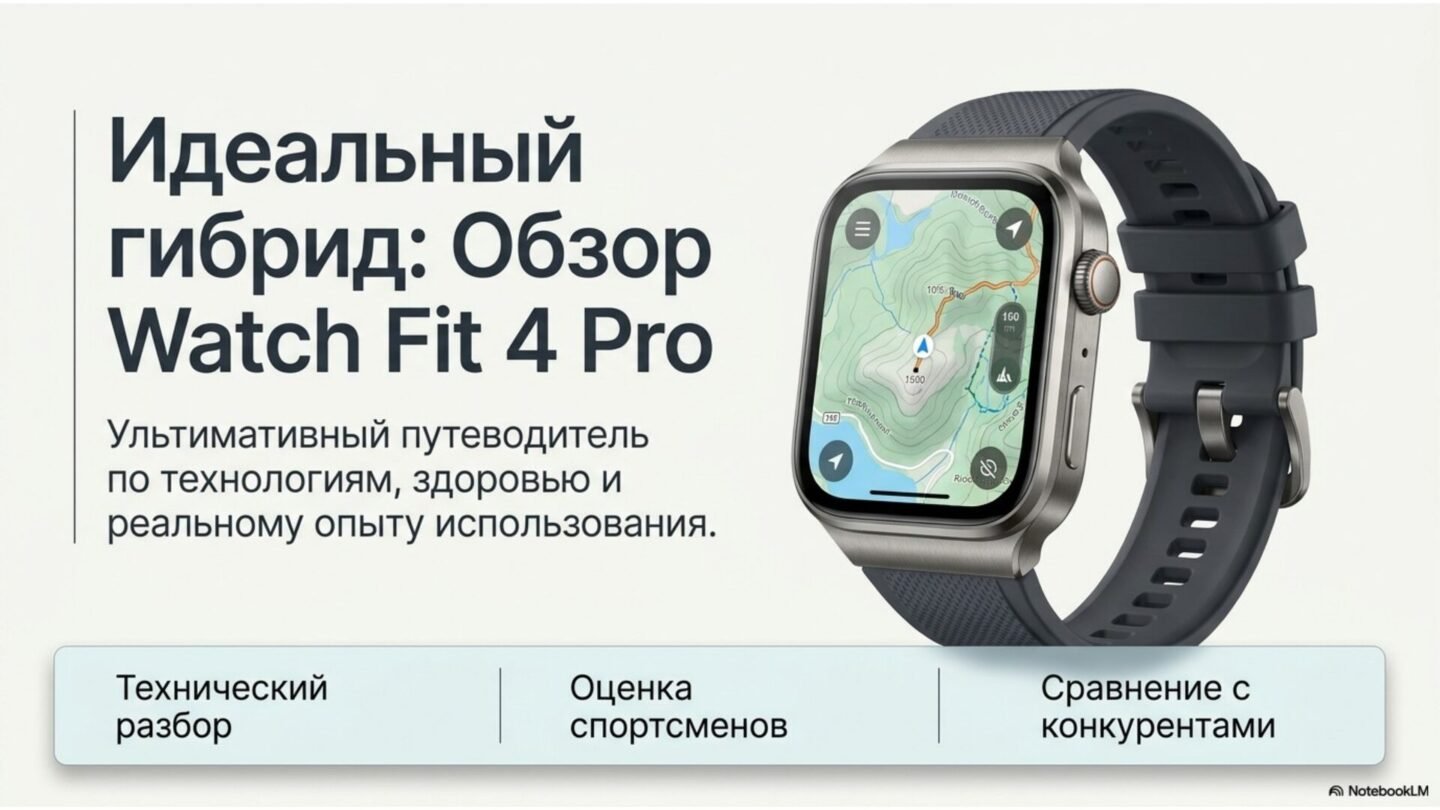
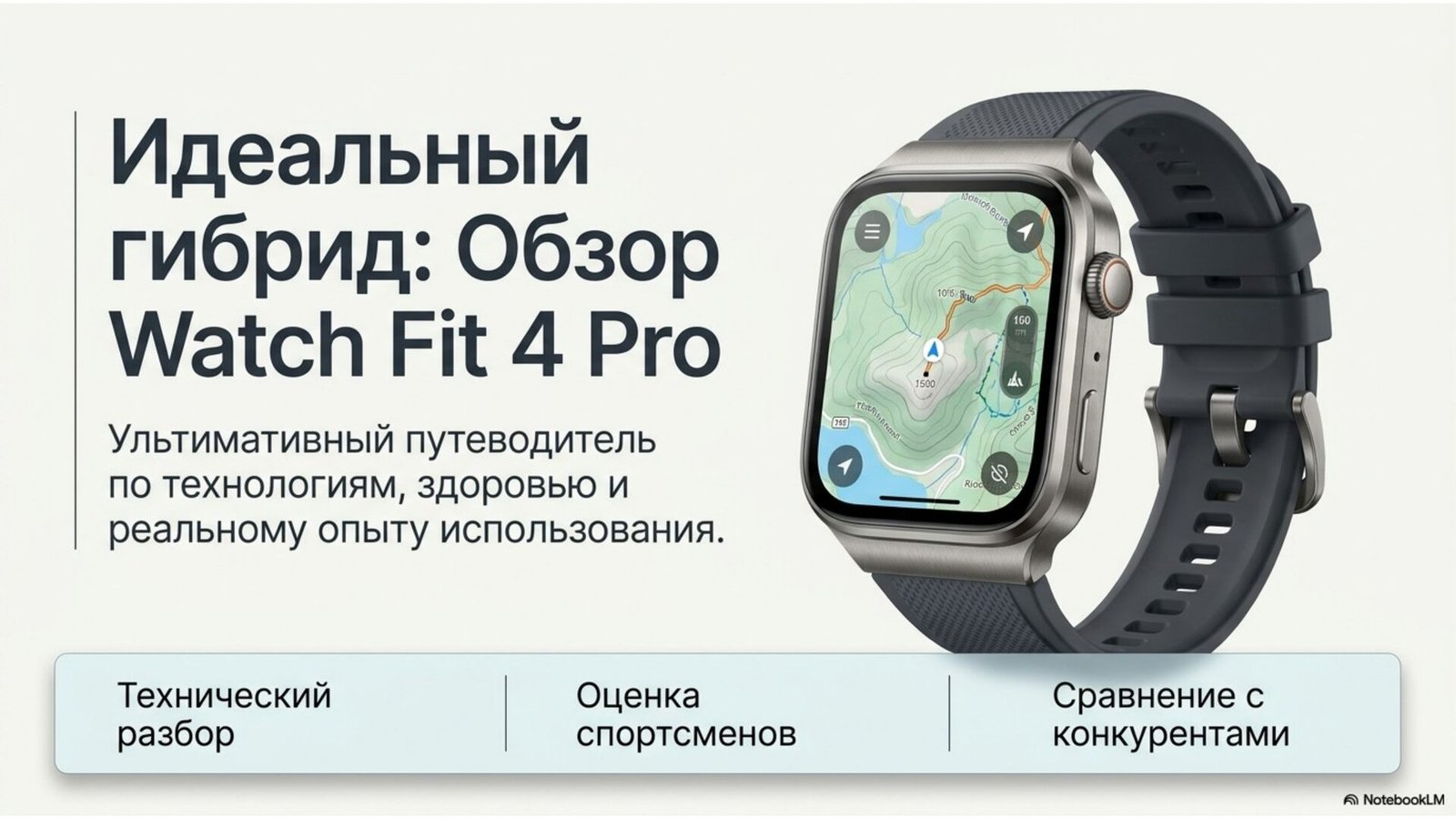
The smartwatch market has long split into two camps. On one side are flagships like the Apple Watch and Samsung Galaxy Watch, with full app integration but a battery that lasts a day or two. On the other are cheap fitness bands in plastic cases that run for a week but look like a budget accessory. The Huawei Watch Fit 4 Pro (codename SYA-B29, released May 2025) tries to claim the space in between: a titanium bezel, sapphire glass, and a 3,000-nit AMOLED display at a budget-segment price.
On paper, it looks like a flagship killer: materials on par with the Apple Watch Ultra, medical sensors (ECG, arterial stiffness measurement), and up to a week of battery life. But behind the premium shell sits the closed HarmonyOS ecosystem with its own constraints, especially for iPhone owners. The watch costs roughly 174 to 249 dollars depending on the region and seller.
This review covers the build and materials, the display, the TruSense health system, real-world GPS accuracy, battery life, ecosystem limitations, the difference between the base Fit 4 and the Pro version, and a comparison with competitors. At the end, who these watches are for and who should look elsewhere.
Design and Materials: Titanium and Sapphire in a Budget Case
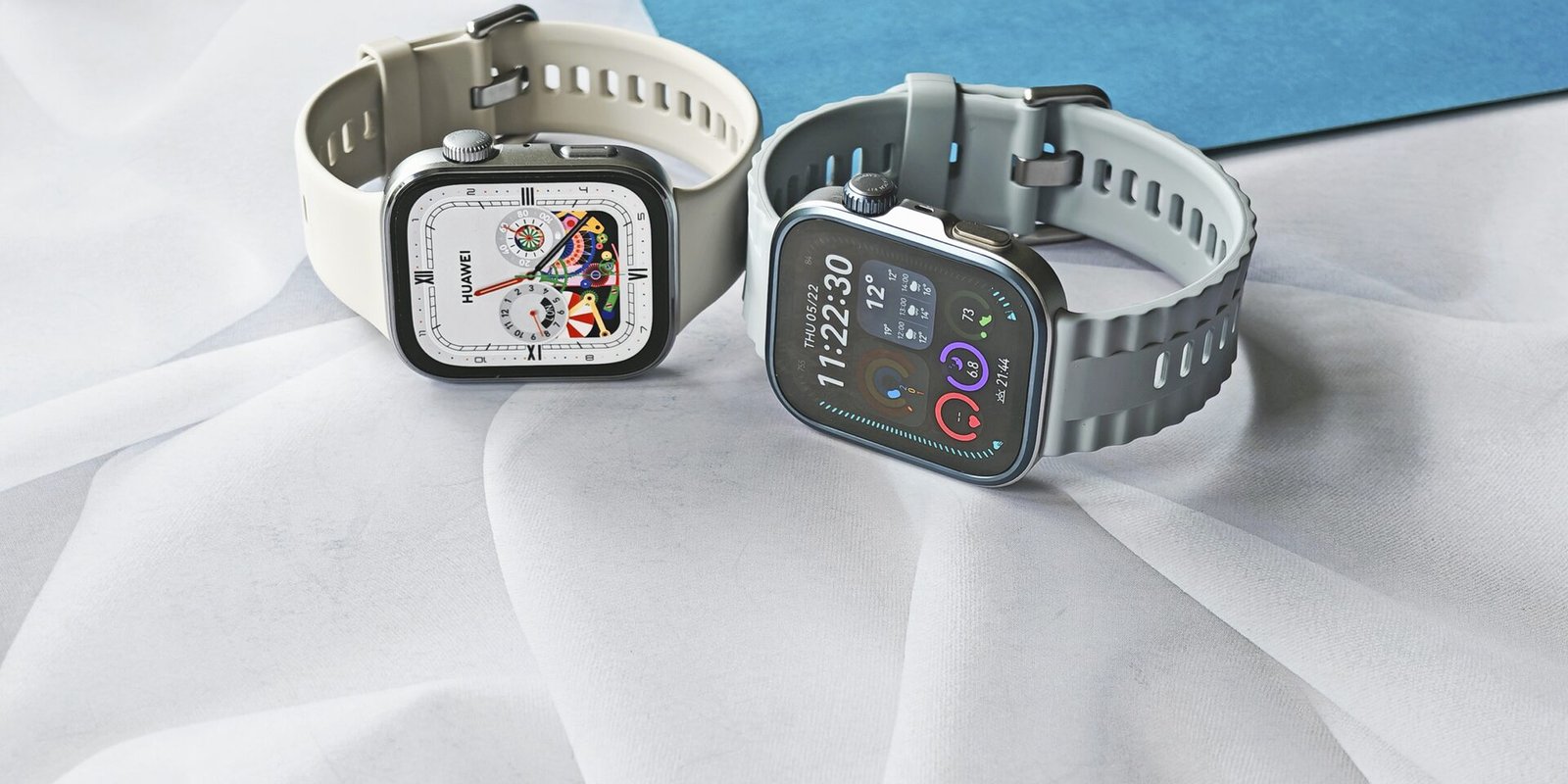
The main argument for the Fit 4 Pro is its materials, usually found in watches costing 600 to 700 dollars. The bezel is made of titanium alloy, the mid-frame is aluminum, and the back panel is polymer fiber housing the TruSense sensor cluster. The case is covered by sapphire glass that resists scratches in everyday wear.
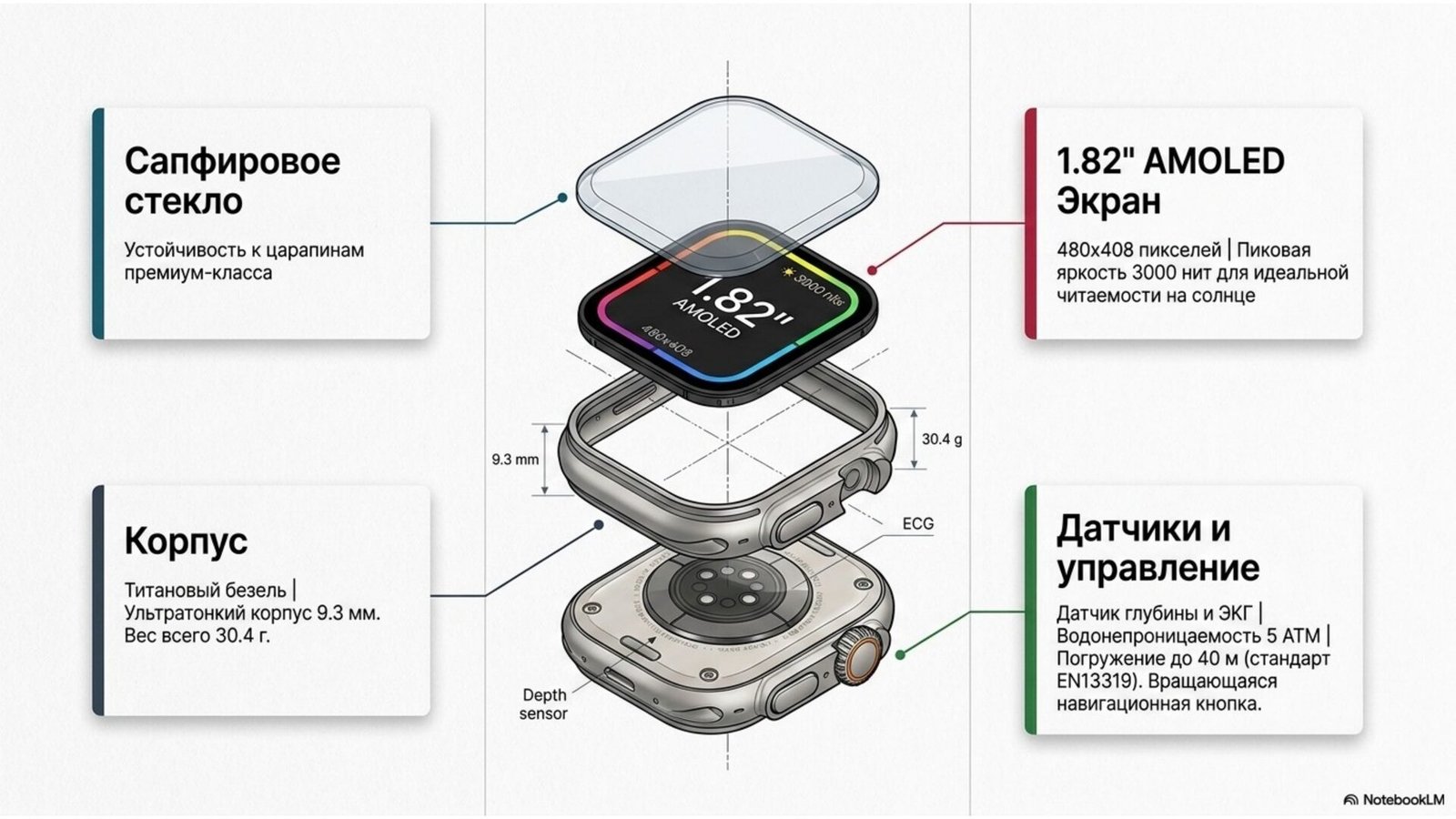
At the same time, the watch stays light and thin: 30.4 g without the strap, 9.3 mm thick. That makes it comfortable for sleep tracking, as the device does not press into the wrist at night. Controls are built around a rotating crown for menu navigation and a separate customizable button for quickly launching workouts.
The bundled strap is silicone, but the mount is standard, so replacement options are available, from sport silicone to metal bracelets. If you want to swap the factory strap for a silicone strap in a different color or fit a metal bracelet for a dressier look, it takes only a couple of minutes.
Display: 1.82-Inch AMOLED and 3,000 Nits
The display is one of the model’s strongest points. It is a 1.82-inch AMOLED panel with a resolution of 480×408 pixels and a density of 347 PPI. Peak brightness is rated at 3,000 nits, which is twice that of the base Fit 4 (2,000 nits) and on par with the Apple Watch Ultra.
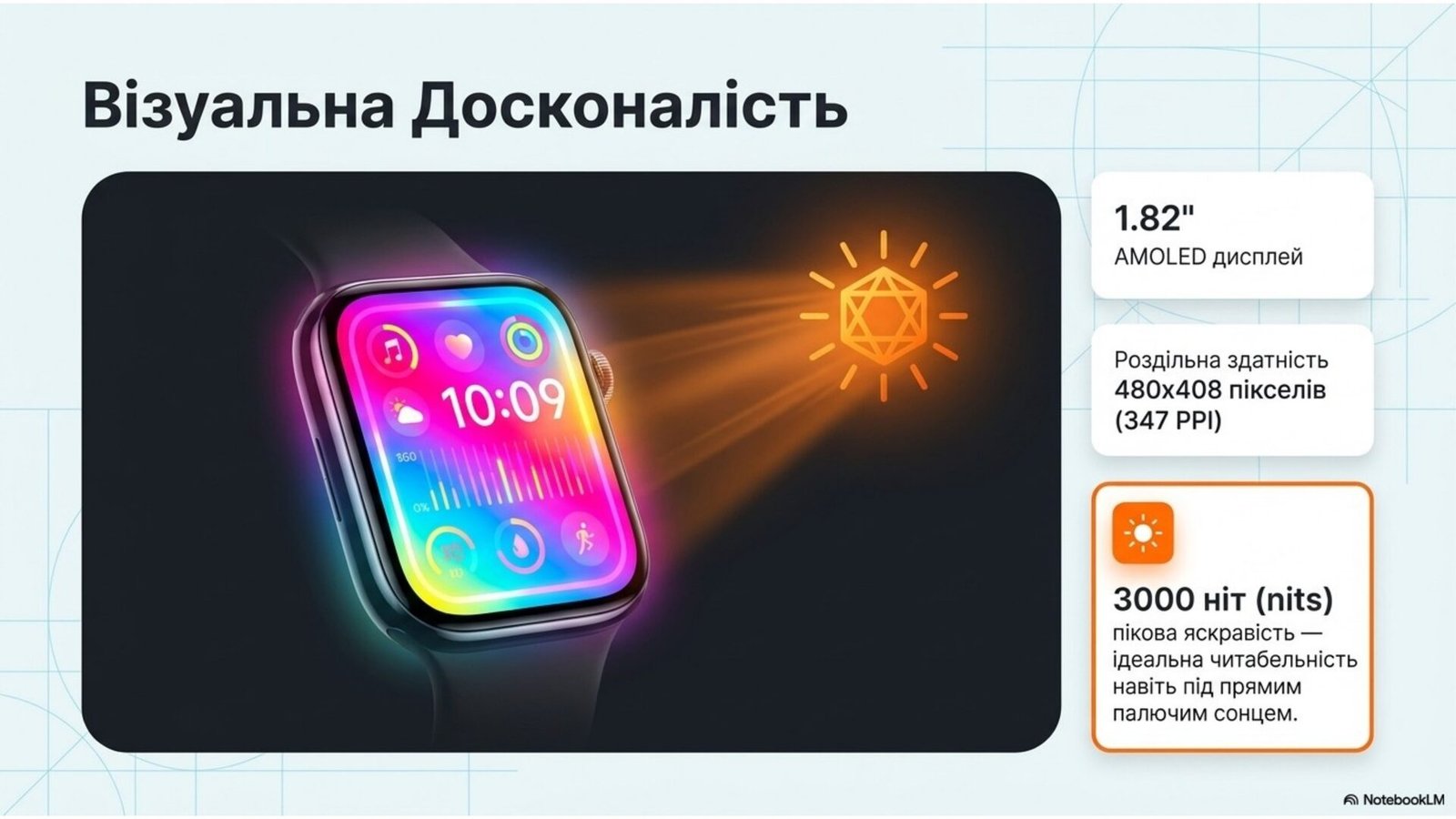
In practice, this means workout data is readable in direct sunlight without shielding the screen with your hand, useful for running, cycling, and trail running. Sapphire glass handles contact with rocks and gear well, but if you plan extreme use, it makes sense to add a screen protector on top. Sapphire resists scratches but not chips from a hard corner impact.
The TruSense Health System: From Monitoring to Diagnostics
The Fit 4 Pro carries the TruSense sensor cluster, which takes the watch beyond simple step counting. The health feature set here is closer to clinical screening than to a fitness tracker.
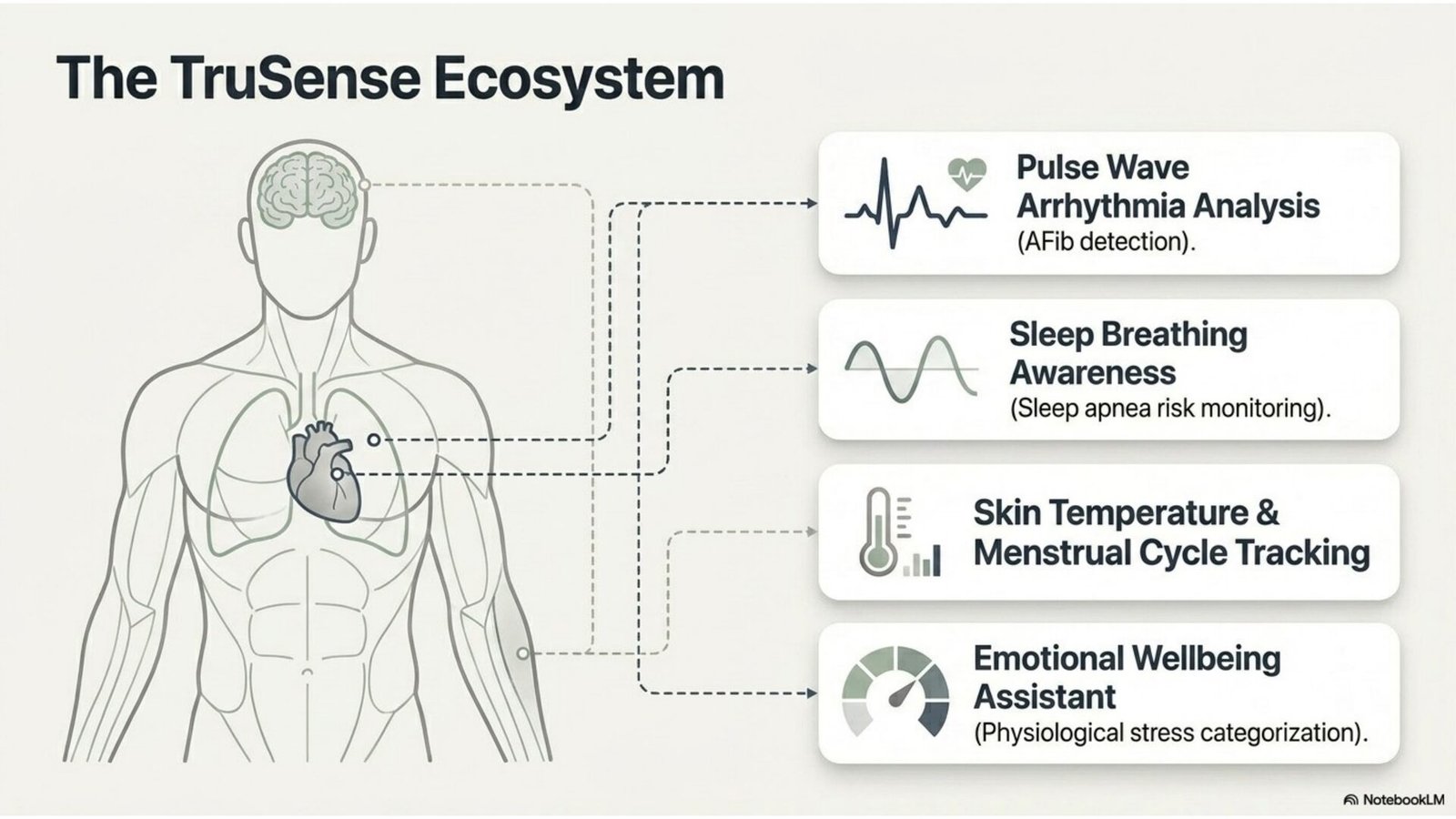
- ECG — certified heart rhythm monitoring with atrial fibrillation (AFib) detection.
- Pulse wave arrhythmia analysis — processing of optical signals to identify irregular rhythms.
- Sleep breathing awareness — assessment of sleep apnea risk via SpO2 and breathing rate.
- Skin temperature — tracking of changes and cycles, including ovulation.
- Emotional wellbeing — stress level visualization based on heart rate variability (HRV).
An important caveat: the device is not a medical instrument, and its data is indicative only. Some functions, particularly arterial stiffness assessment, are not available in all regions and require users to be 18 or older.
Arterial Stiffness and the X-TAP Sensor
The key health innovation is Pulse Wave Velocity (PWV) measurement. This metric reflects arterial elasticity: the faster the pressure wave travels through the vessels, the stiffer they are, which is considered an early marker of cardiovascular risk.
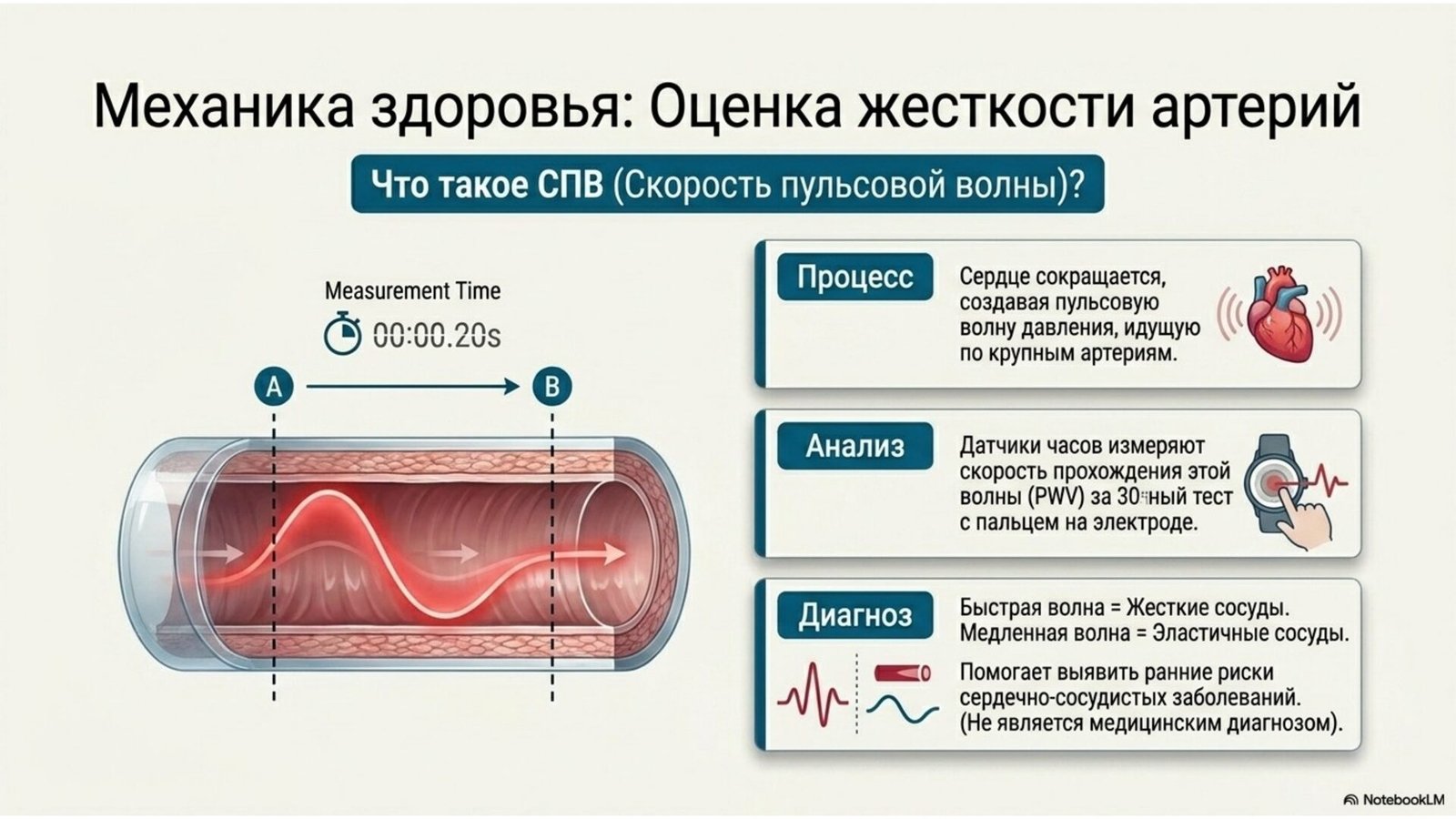
The measurement is taken through the X-TAP sensor on the side of the case. The procedure requires active participation: rest your watch-bearing arm flat on a table and hold a finger against the side electrode for 30 seconds, staying still and breathing evenly. This adds minor friction but is necessary for data integrity. The function is contraindicated for people with pacemakers.
Sleep Tracking: Where the Watch Beats Competitors
Sleep tracking is one area where the Fit 4 Pro outperforms many rivals. According to user feedback, the watch automatically and accurately detects both night sleep and daytime naps without requiring a strict schedule. Chaotic sleep patterns are recognized more reliably than on Garmin or Apple, which are often tied to preset windows.
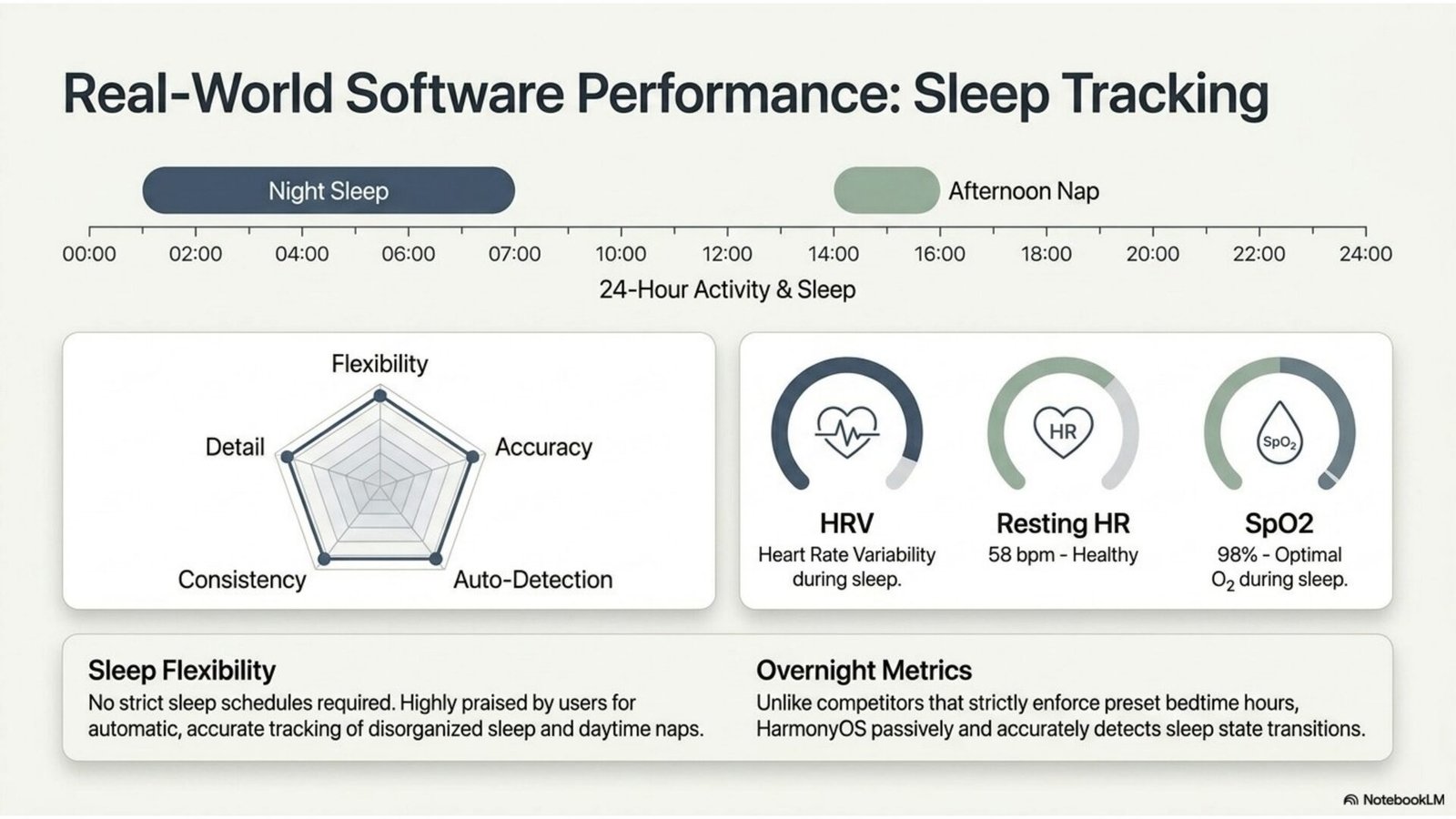
During sleep, the watch passively tracks heart rate variability (HRV), resting heart rate, and blood oxygen saturation (SpO2). HarmonyOS detects transitions between sleep stages without strict reliance on a schedule, which is especially valuable for people with irregular routines.
GPS and Navigation: Accuracy on Real Routes
The Fit 4 Pro features dual-band GNSS (L1+L5) with support for GPS, GALILEO, QZSS, BDS, and GLONASS. Satellites lock quickly and the track stays stable. There is full standalone navigation: downloading regional offline maps over Wi-Fi directly to the watch, checkpoint navigation, and a Walk Back function without using the phone.
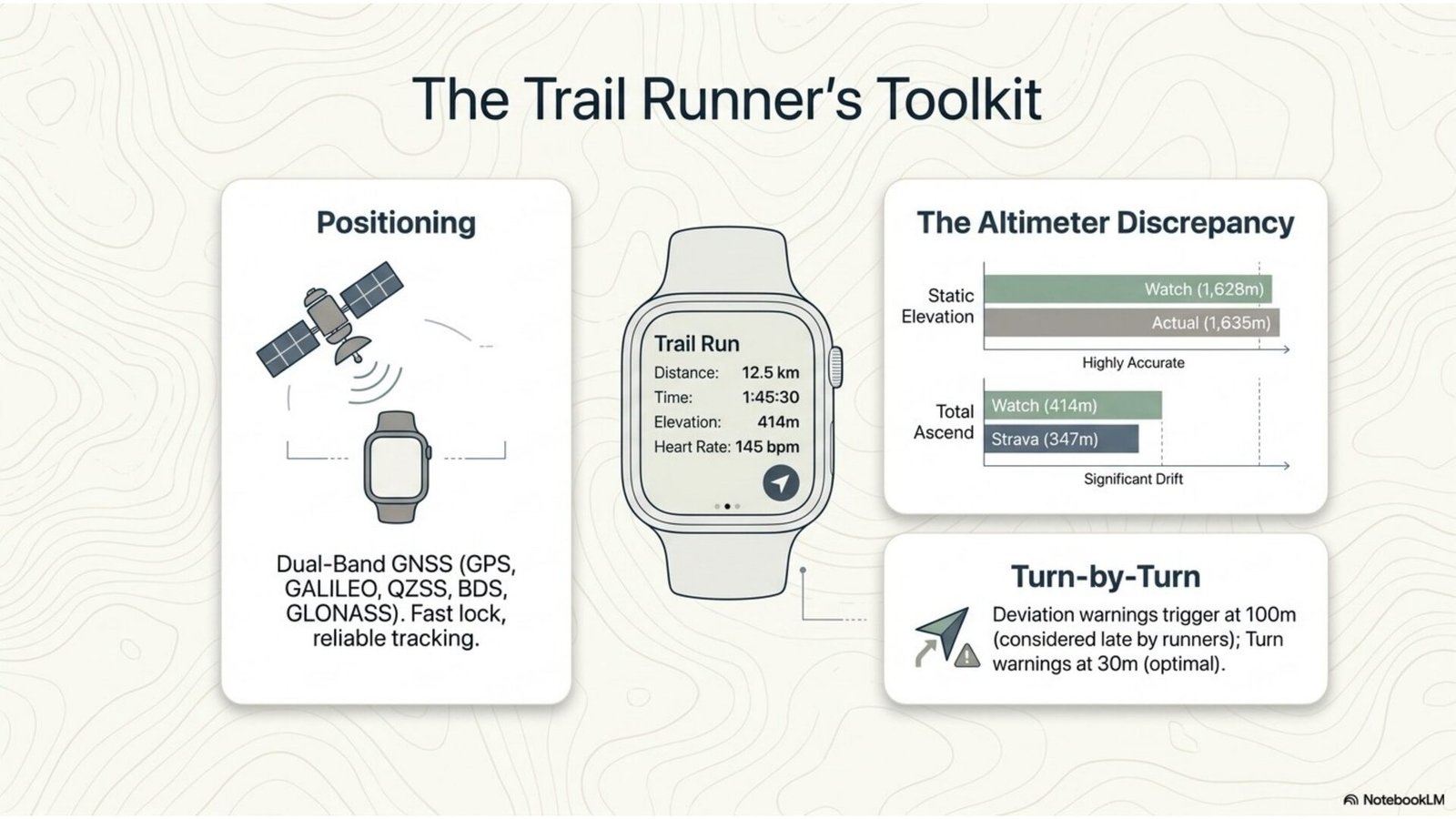
Accuracy is not flawless. In field tests, the track itself and the heart rate match reference devices, and absolute elevation is accurate (1,628 m on the watch versus 1,635 m in reality). But total ascent is overstated: the watch showed 414 m against 347 m on Strava, a discrepancy of about 19%. In addition, the off-route warning triggers late, at roughly 100 meters, whereas the turn warning at 30 meters works cleanly. For recreational running and hiking this is enough, but for competitive trail running, where accurate ascent matters, it is a limitation.
Battery Life: The Main Trump Card
The 400 mAh battery delivers real autonomy that flagships with near-daily charging cannot match. With typical use and round-the-clock monitoring (without an always-on display), the watch lasts about 7 days. In power-saving mode you can stretch it to the manufacturer’s stated maximum, and with an always-on display (AOD) and active sports, around 4 days.
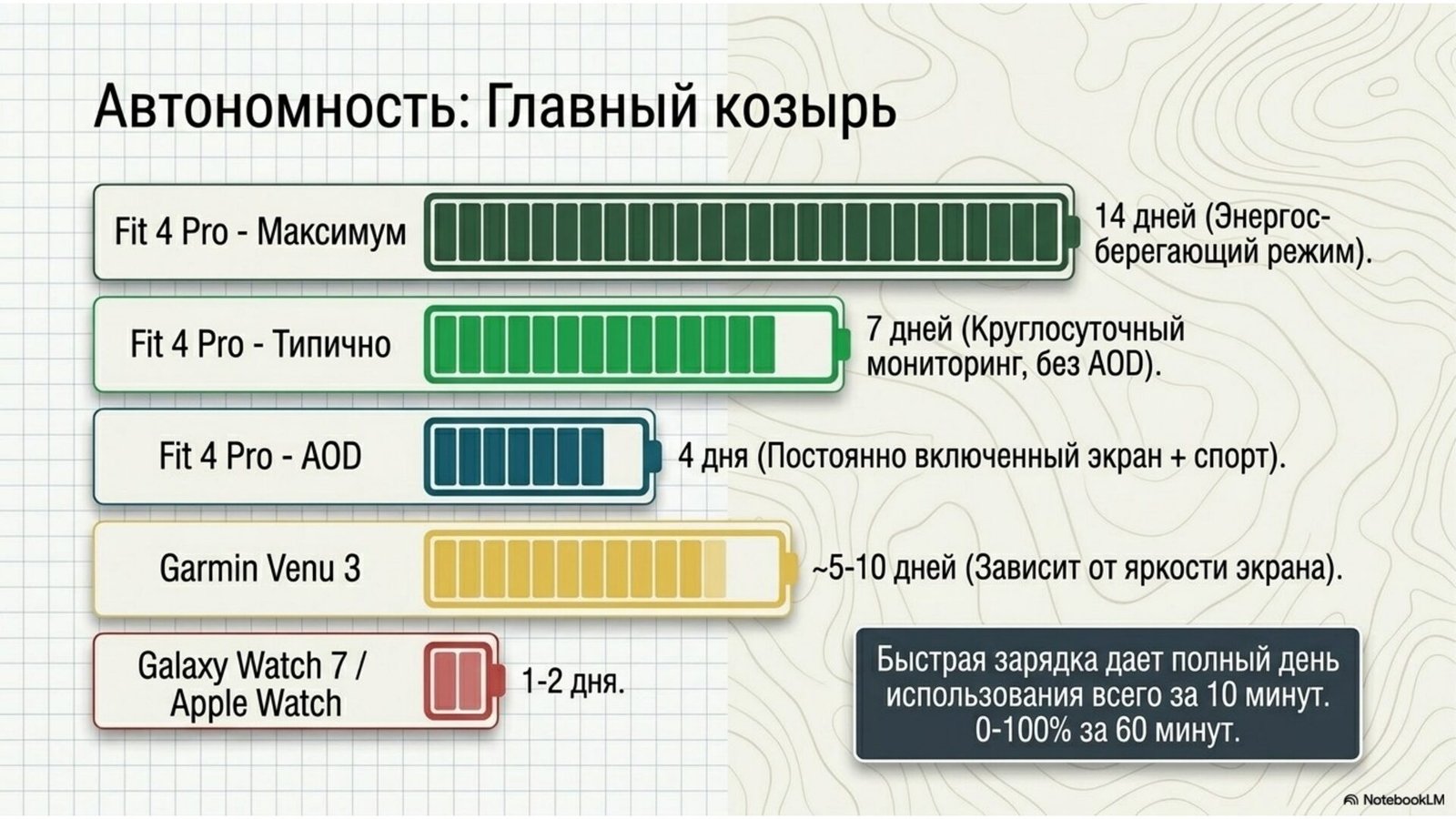
With active GPS tracking and heart rate monitoring, drain is about 9% per hour. Charging is wireless at 5 W: from 0 to 100% in roughly 60 minutes. By comparison, the Samsung Galaxy Watch 7 and Apple Watch need topping up every 1 to 2 days, a fundamental difference, especially on multi-day trips without access to an outlet.
Ecosystem: HarmonyOS Constraints
This is where the downside begins. HarmonyOS is power-efficient but isolated from the global app market. Some functions work flawlessly, some require workarounds, and a few are unavailable entirely, especially on iOS.
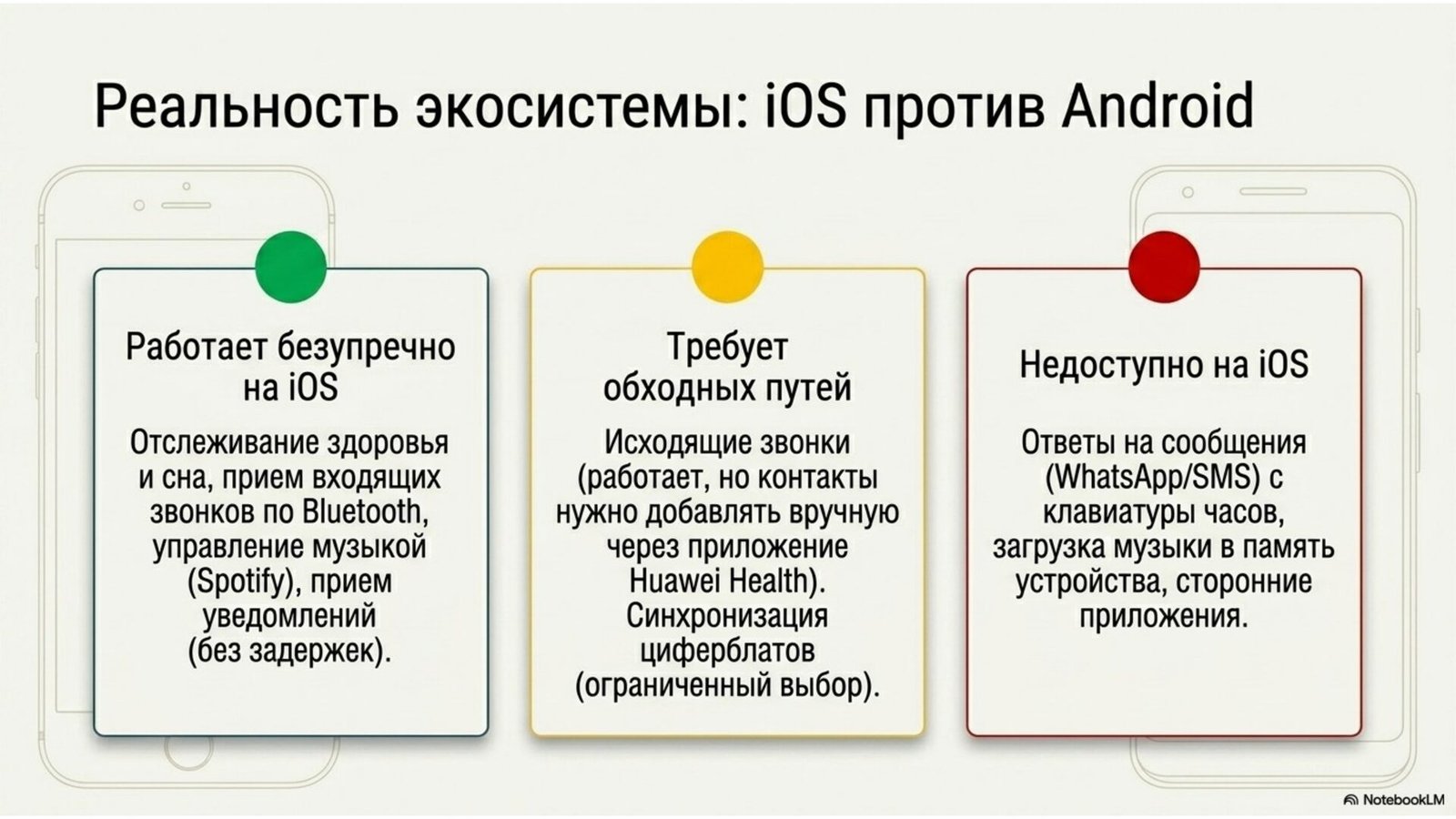
- Works flawlessly: health and sleep tracking, incoming calls over Bluetooth, music control (including Spotify), notifications without delay.
- Requires workarounds: outgoing calls work, but contacts must be added manually through Huawei Health; watch face sync is limited.
- Unavailable on iOS: replying to messages (WhatsApp, SMS) from the watch keyboard, loading music to device storage, third-party apps.
A separate issue is NFC payments. They are tied to the Quicko app, which works in only a few European countries (mainly Germany and Austria). Outside those regions, the NFC module is effectively useless. For iPhone owners, the watch remains an advanced fitness tracker with notification support, but not a full smartphone extension.
Fit 4 or Fit 4 Pro: What’s the Difference
The lineup splits into the base Fit 4 and the Pro version. The difference is not only in materials but also in the sensor set and capabilities.
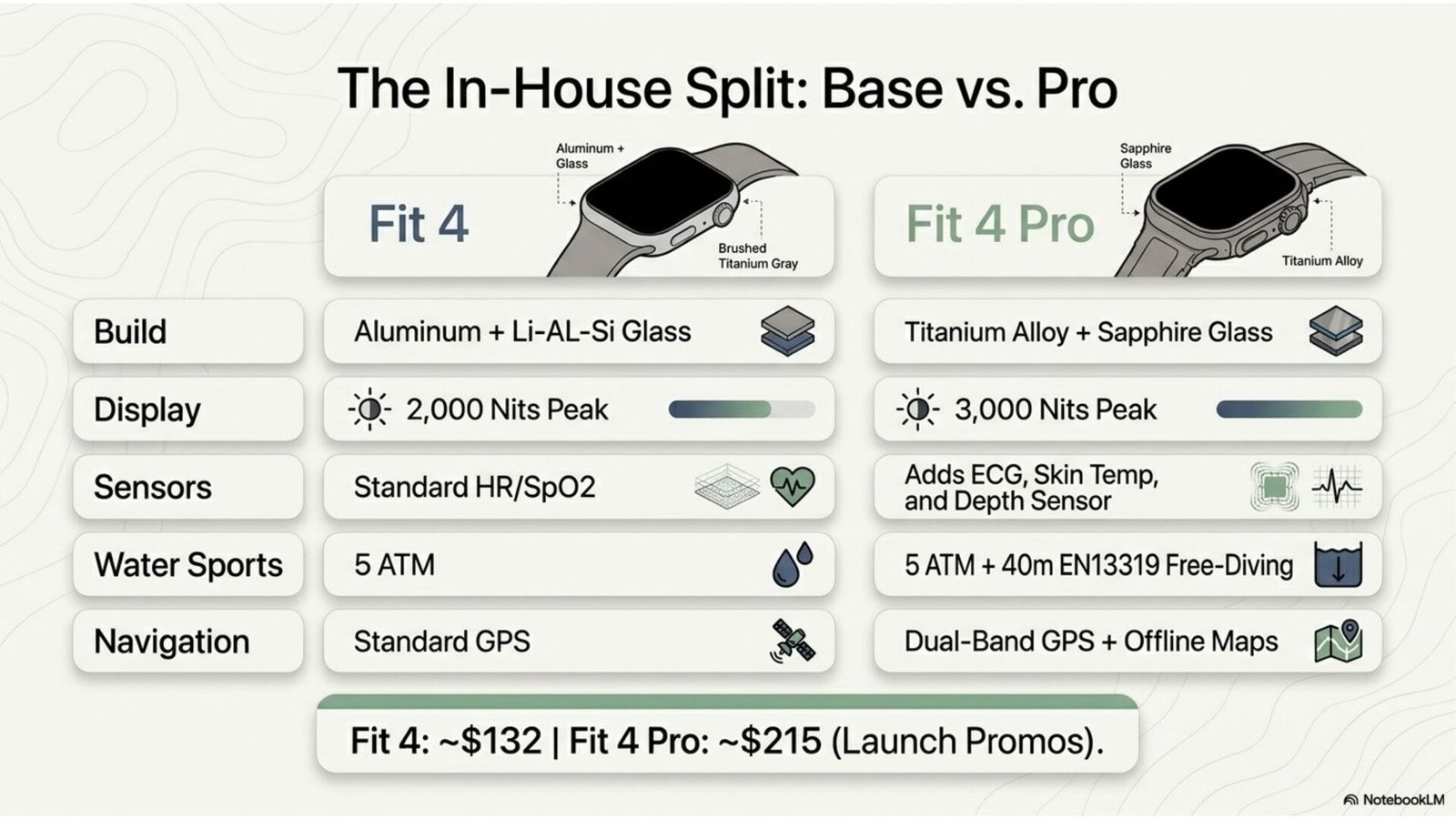
- Materials: Fit 4 uses aluminum and lithium-aluminosilicate glass; Fit 4 Pro uses titanium alloy and sapphire glass.
- Display: 2,000 nits on the Fit 4 versus 3,000 nits on the Pro.
- Sensors: Fit 4 has a basic set (heart rate, SpO2); the Pro adds ECG, a skin temperature sensor, and a depth sensor.
- Sports: Fit 4 has 5 ATM water resistance; the Pro adds EN13319 certification for diving to 40 meters and offline maps.
If medical sensors, diving, and standalone navigation matter, the premium for the Pro is justified. If you need a neat fitness tracker with a good screen for the city, the base Fit 4 is enough.
Comparison with Competitors
A device’s value is defined by its alternatives. The Fit 4 Pro lands in the “premium budget” niche, where it has few direct rivals on the materials-to-price ratio.
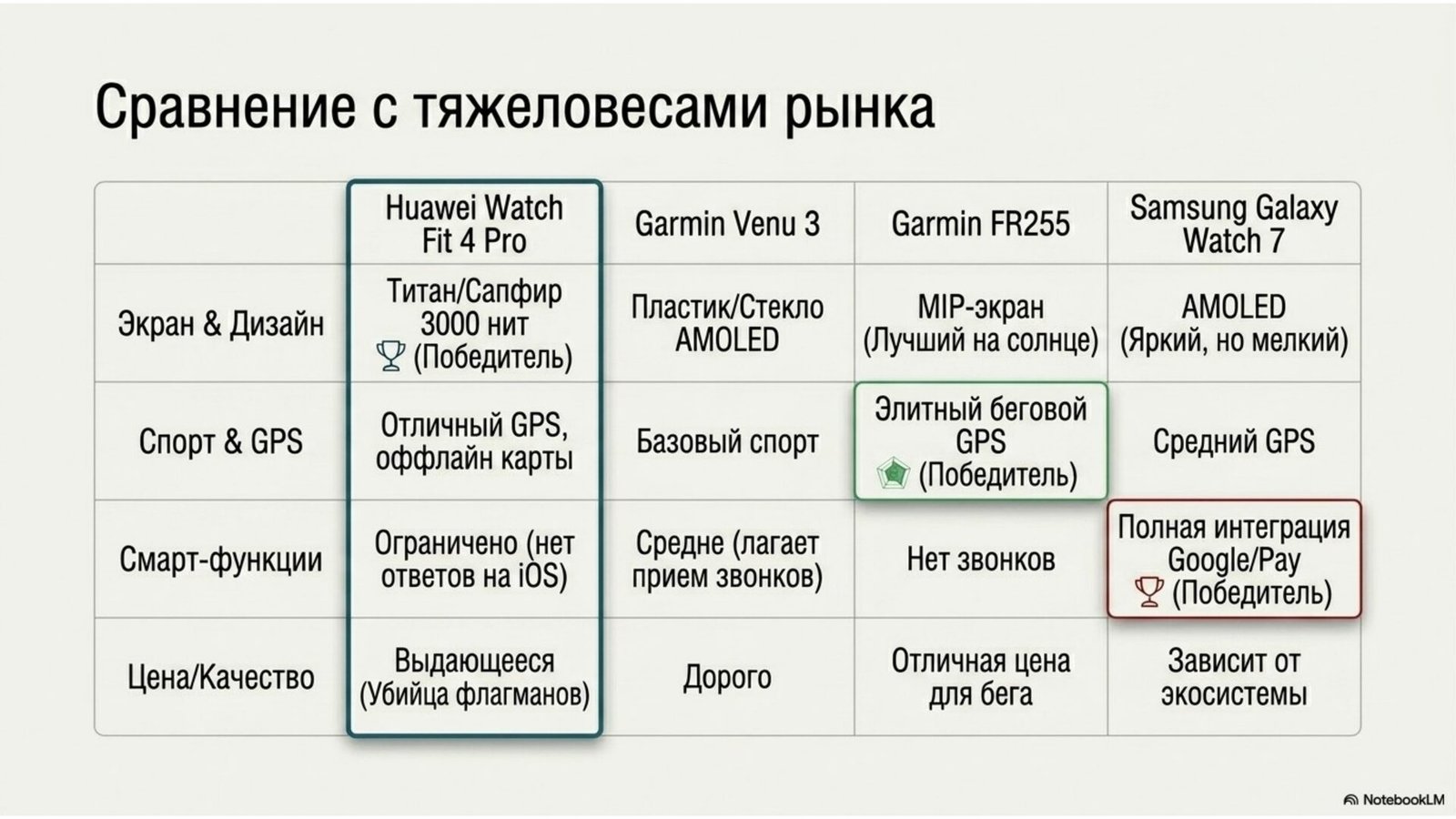
- Garmin Venu 3 — basic sports and an AMOLED screen, but pricier and with mediocre call handling.
- Garmin FR255 — reference running GPS and the best screen in sunlight (MIP), but no microphone or calls.
- Samsung Galaxy Watch 7 — full Google and Google Pay integration, a bright AMOLED, but only 1 to 2 days of battery.
In this comparison, the Fit 4 Pro wins on materials, screen brightness, and battery life, but yields to Apple and Samsung in depth of smartphone integration, and to the Garmin FR255 in running GPS. On the price-to-quality ratio, it is one of the best offers in its class.
Who These Watches Are For
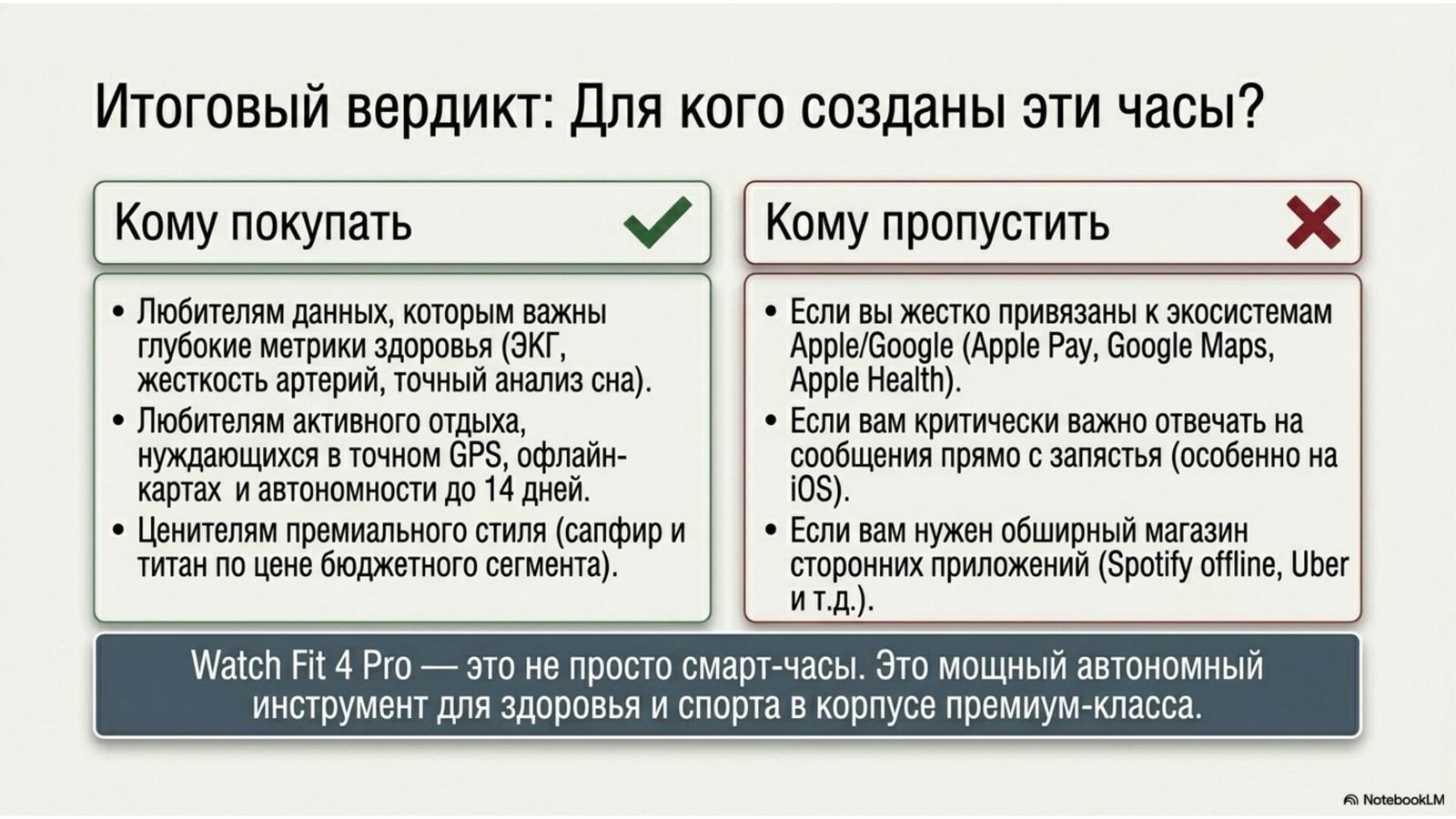
Worth buying if you:
- value deep health metrics — ECG, arterial stiffness assessment, accurate sleep analysis;
- do outdoor activities and need accurate GPS, offline maps, and multi-day battery life;
- want a premium look (sapphire and titanium) at a budget-segment price.
Worth skipping if you:
- are firmly tied to the Apple or Google ecosystems (Apple Pay, Google Maps, Apple Health);
- want to reply to messages straight from your wrist, especially on iPhone;
- need an extensive third-party app store (Spotify offline, Uber, and the like).
How to Set Up the Watch After Unboxing
- Fully charge the watch with the bundled magnetic dock (about 60 minutes to 100%).
- Install the Huawei Health app on your phone (Android 8.0+ or iOS 13.0+).
- Turn on Bluetooth and scan the QR code on the watch screen to pair.
- Confirm pairing and wait for the latest firmware to install.
- Set up your profile: height, weight, age, sex, for correct metric calculations.
- Enable the monitoring functions you need: heart rate, SpO2, sleep tracking, stress.
- For iOS, add contacts manually through Huawei Health if you plan to take calls.
- Download offline maps for your region over Wi-Fi if you plan standalone navigation.
Frequently Asked Questions
Does the Huawei Watch Fit 4 Pro work with iPhone?
Yes, the watch is compatible with iOS 13.0 and above. Health tracking, calls, and notifications work. But you cannot reply to messages from the watch, there is no voice assistant, and NFC payments are available in only a few European countries.
Can you swim and dive with this watch?
Yes. The 5 ATM water resistance is rated for depths up to 50 meters, and the EN13319 certification allows diving to 40 meters. After swimming, the Drain function ejects water using sound.
How accurate is the GPS?
The track itself and absolute elevation are accurate. The weak point is inflated total ascent (about 19% versus Strava) and a delayed off-route warning. For running and hiking this is enough; for competitive trail running it may fall short.
How long does the battery last?
About 7 days with typical use, up to 4 days with an always-on display and active sports. Charging takes roughly 60 minutes from 0 to 100%.
How does the Fit 4 Pro differ from the regular Fit 4?
The Pro version has a titanium case and sapphire glass instead of aluminum, a 3,000-nit screen instead of 2,000, plus ECG, a skin temperature sensor, a depth sensor, diving certification, and offline maps.
- Build & materials — 4.6
- Display — 4.7
- Battery life — 4.8
- Health sensors — 4.5
- Ecosystem (HarmonyOS) — 3.2
A premium-feeling, multi-day fitness watch with strong health sensors — held back only by the closed HarmonyOS ecosystem and region-limited NFC.
Conclusion
The Huawei Watch Fit 4 Pro fills a specific niche: premium materials, medical sensors, and multi-day battery life at a price for which competitors offer a plastic case or a single day of use. It is a strong choice for anyone who puts health, sports, and battery life above app integration.
The honest limitations are clear too: the closed HarmonyOS ecosystem, NFC that is useless outside a couple of countries, no message replies from the wrist, and inflated GPS ascent. If you live in the Apple or Google ecosystem and want full smart features, this watch will disappoint. But if you need a standalone health and sports tool in a premium case, the Fit 4 Pro is hard to beat on value.
💡 This review contains affiliate links. If you click through and make a purchase, we may earn a commission at no extra cost to you. This supports our editorial work and does not affect our recommendations. Learn more →